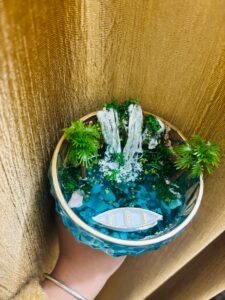
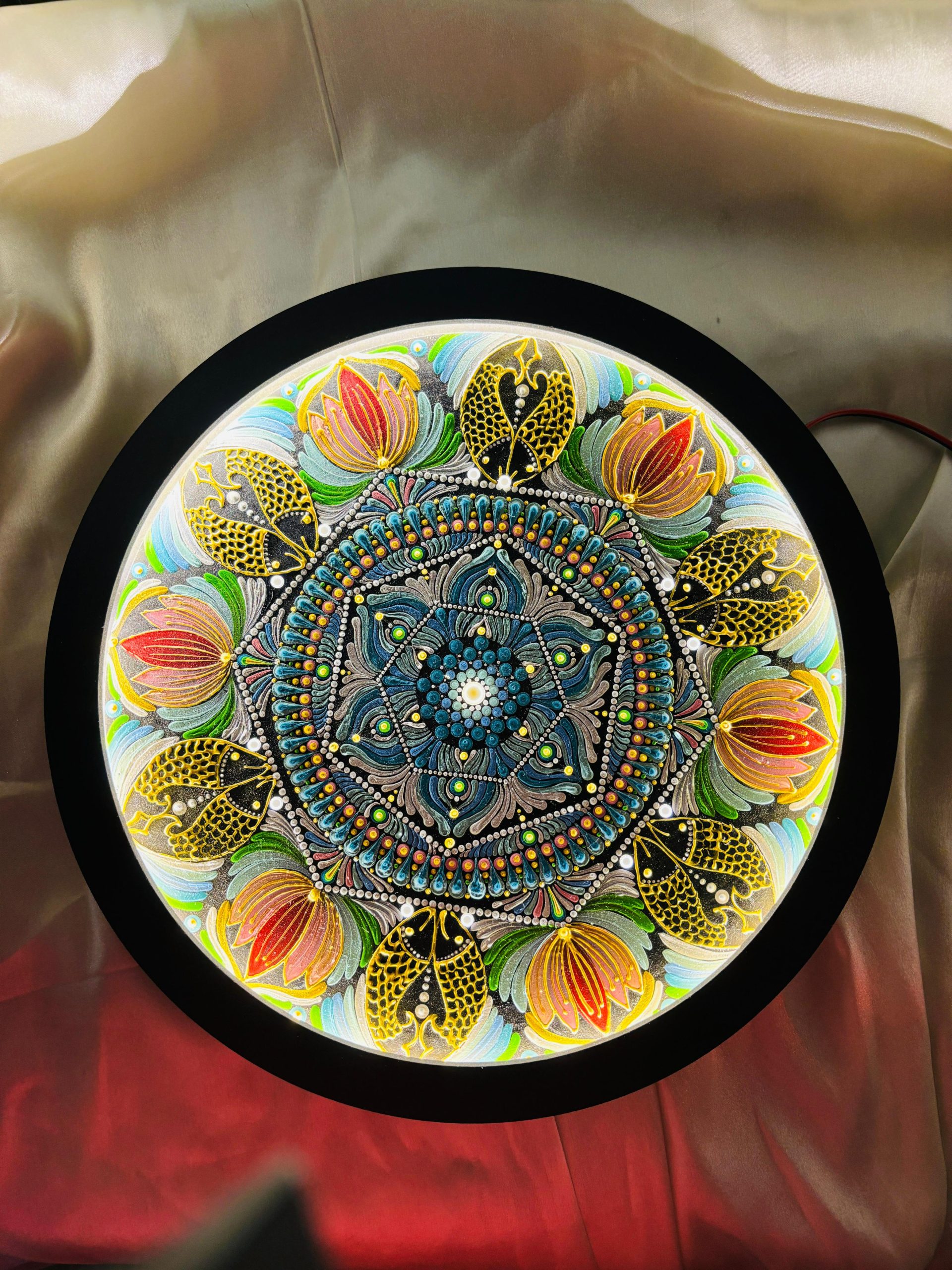
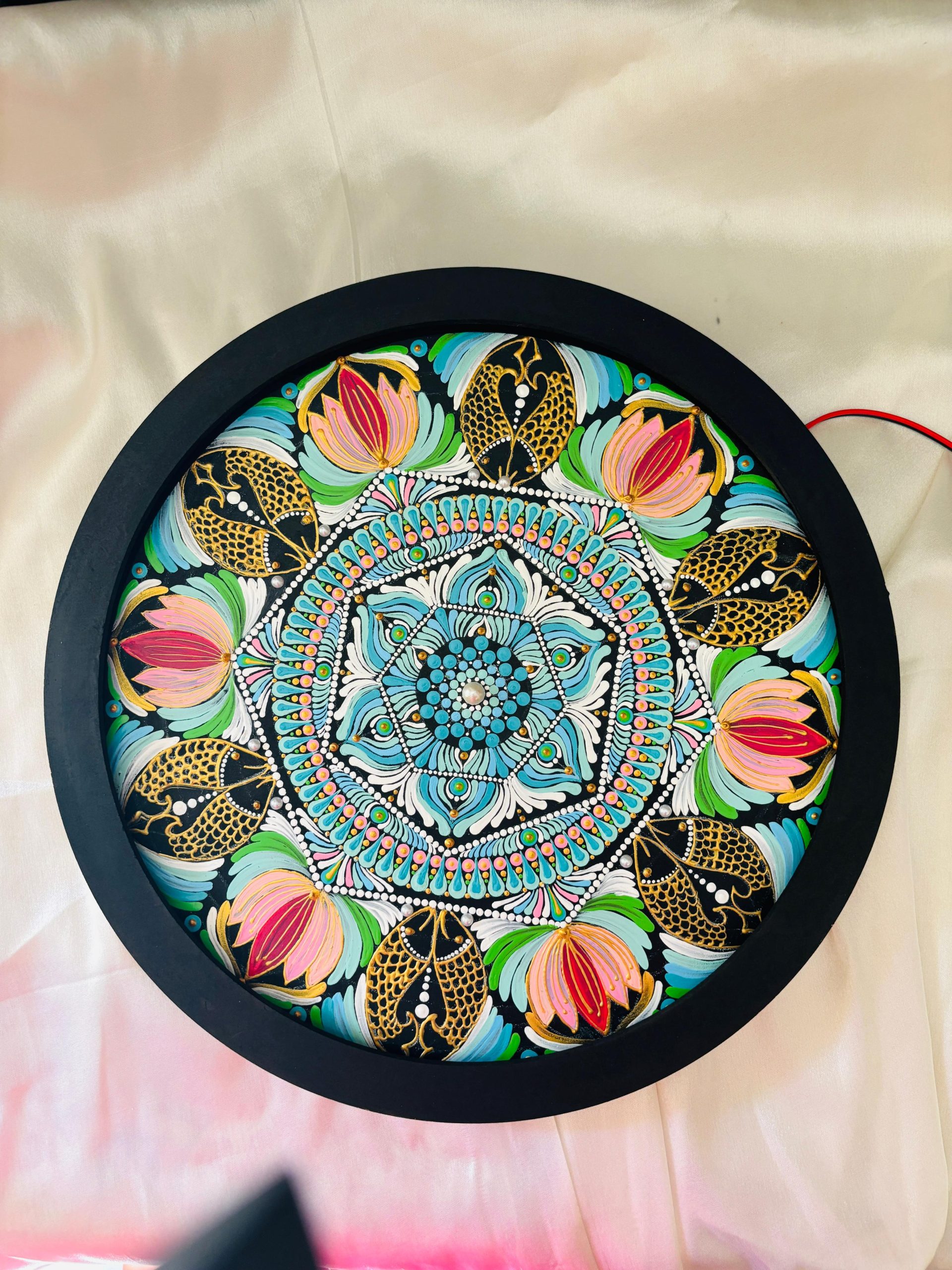
Fish and lotus are very symbolic in Indian culture and are often found in artistic and spiritual manifestations, particularly mandalas. In Buddhism and Hinduism, the lotus is a sacred flower that symbolizes enlightenment, purity, and rebirth. Its bloom in muddy waters represents overcoming life’s obstacles to reach a better state of life. Frequently portrayed in couples, fish are seen as representations of wealth, fertility, and transformation, symbolizing the organic flow and diversity of life.
The combination of fish and lotus flowers into mandalas enhances their spiritual meaning and brings growth, balance, and good energy into one’s life.
India’s artistic heritage is a dynamic fusion of modern and traditional styles. India, a nation rich in ancient art traditions, has skillfully combined contemporary trends with its age-old methods. By bringing the past and present together, this fusion enhances cultural expression.
1. Traditional Indian Art Forms: A Historical Legacy
India has a rich artistic heritage, with many different art styles that have cultural and religious significance, including Tanjore painting, Madhubani, Pattachitra, and Warli. Indian art has long used vibrant colors and elaborate patterns to portray tales, rituals, and everyday life. These traditional forms of art are admired for their workmanship and symbolism, which have been transmitted down through the years.
2. The Influence of Globalization and Modernity
India is becoming more receptive to modern and Western influences as a result of globalization. Today’s artists are exposed to a wide range of media, methods, and ideologies, resulting in a changing art landscape that blends regional customs with international trends. While honoring their culture, contemporary Indian painters use abstract, minimalist, and conceptual elements.
3. How Artists Are Blending the Old with the New
Contemporary Indian artists modify classic subjects using a variety of mediums, such as mixed media and digital art. Some artists, for example, display religious symbols in a modern, abstract style or integrate Madhubani designs into contemporary designs. The combination of methods gives traditional art an entirely new perspective on life and makes it applicable to a modern audience.
4. The Role of Art Galleries and Exhibitions
Exhibitions and art galleries that display artworks that combine traditional and modern features are important in promoting this fusion. Younger generations are drawn in with exhibitions celebrating India’s fusion art, which encourages them to value and conserve old artistic traditions while welcoming innovation.
5. Impact on India’s Global Cultural Presence
Indian culture may reach a wider global audience by fusing traditional and modern art. Indian art is now more approachable and relatable because of the fusion, which increases its attraction for art enthusiasts everywhere. This helps to bridge cultural gaps and gives India’s artistic identity a special place on the international scene.
A Continuous Evolution of Indian Art
India’s capacity to combine traditional and modern art provides proof of its adaptability and creativity. As Indian artists continue to experiment with this combination, they push limits and honor their past, resulting in a vibrant, timeless, and contemporary art environment.