Pichwai style cow with jharokhaCategoriesCreative Tips & Tricks

Learn with Ranggat: Blending Tradition and Creativity in Pichwai Art

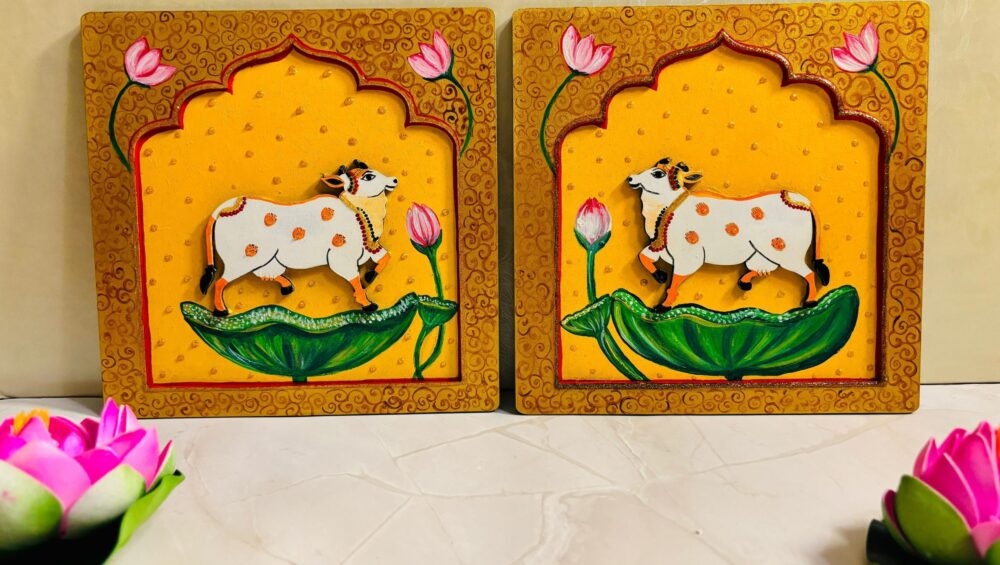
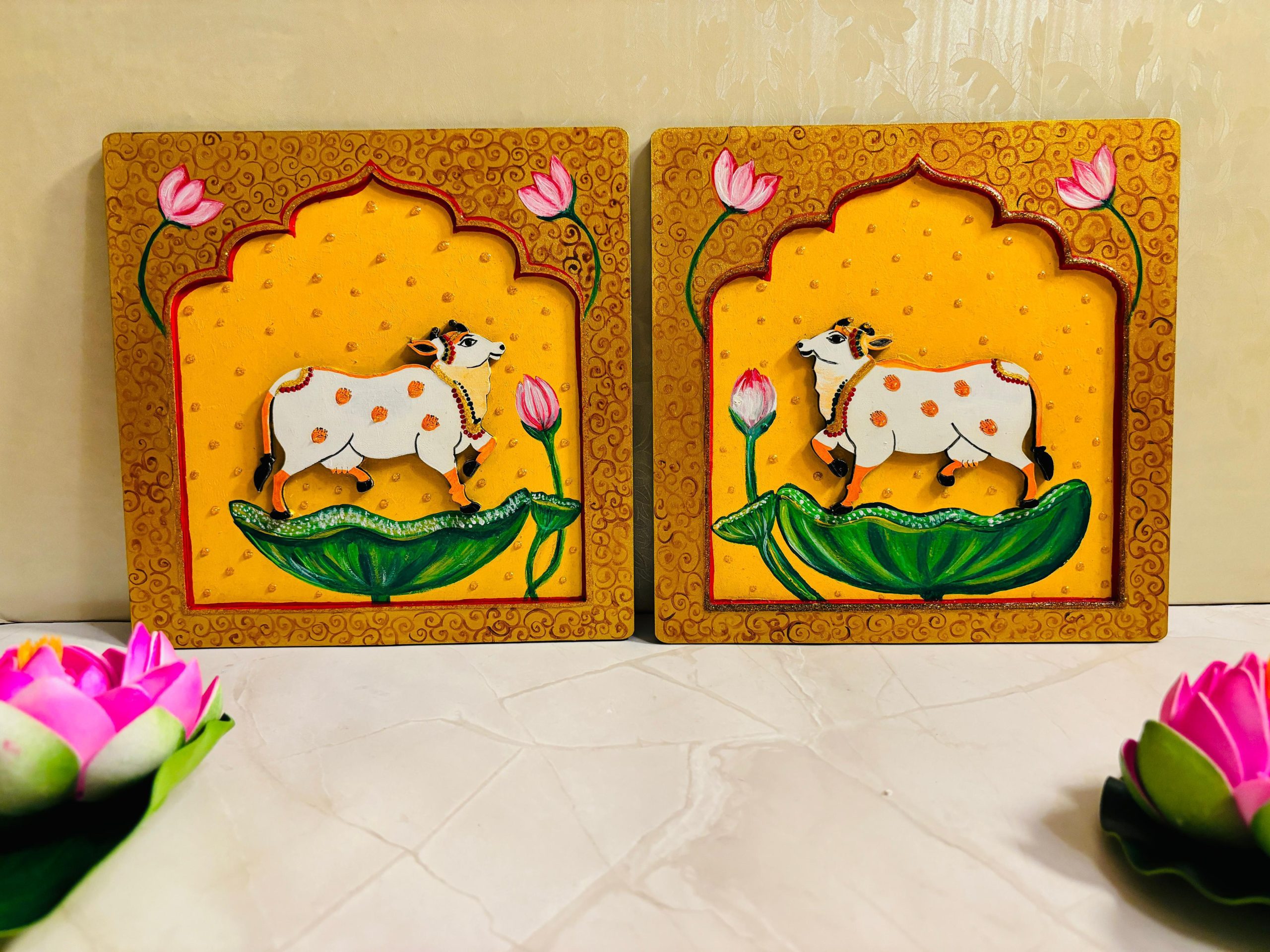
At Ranggat, every piece of art tells a story — not just through its colors and forms, but through the cultural heritage it carries. One such masterpiece is the Pichwai Style Cow with Jharokha, a traditional-inspired artwork that beautifully blends the essence of classical Pichwai art with creative modern expression.

Understanding Pichwai Art

Pichwai painting is a traditional Indian art form that originated in Nathdwara, Rajasthan. For centuries, these paintings were created as devotional backdrops for temples, especially behind the idol of Lord Shrinathji. Over time, Pichwai evolved into a celebrated art style known for its intricate detailing, symbolic motifs, and rich storytelling through visual elements.

The art form reflects themes of devotion, nature, seasons, and spirituality, making it both culturally significant and visually captivating.

The Sacred Symbolism of the Cow

In Indian culture, the cow symbolizes purity, prosperity, and nourishment. In Pichwai-inspired artworks, the cow often represents peace, divine blessings, and harmony with nature. Its calm presence evokes spiritual balance and positive energy, making it a meaningful motif for home décor and sacred spaces.

The cow’s association with Lord Krishna further deepens its significance, connecting the artwork to themes of devotion and timeless tradition.

The Jharokha: A Window into Heritage

The jharokha, an ornate architectural window commonly found in Indian palaces and heritage structures, adds a distinctive traditional frame to the artwork. In this piece, the jharokha acts as a symbolic window — offering a glimpse into India’s artistic legacy while enhancing the visual depth and elegance of the painting.

Where Tradition Meets Creativity

The Pichwai Style Cow with Jharokha by Ranggat is a thoughtful blend of heritage and innovation:

  • Inspired by traditional Pichwai motifs and storytelling
  • Designed to complement both classic and contemporary interiors
  • Crafted with attention to fine details and balanced composition

This fusion allows the artwork to retain its traditional soul while appealing to modern aesthetics.

A Meaningful Addition to Your Space

This artwork is more than décor — it is an expression of culture, spirituality, and creative craftsmanship. Whether displayed in a living room, meditation area, or entryway, it brings a sense of calm, devotion, and artistic richness to its surroundings.

With the Pichwai Style Cow with Jharokha, Learn with Ranggat invites you to experience how traditional art can evolve beautifully while staying rooted in its origins.

CategoriesCreative

Pichwai Cow with Golden Jharokha: Traditional Wall Art for Festive Decor & Gifting

Pichwai style cow with jharokha

Art has the magical power to bring stories to life, and when it comes to traditional Indian art, Pichwai paintings are one of the most soulful forms. Pichwai art, which has its roots in Rajasthani culture, honors the holy in all of its pristine forms via spiritual depth, elaborate detailing, and symbolism. A captivating example of this is the Pichwai Cow with Golden Jharokha, which is the ideal fusion of craftsmanship, color, and culture.

One of the most expressive forms of traditional Indian art is pichwai paintings, and art has the enchanted ability to bring stories to life.

The Essence of Pichwai Art

The art of Pichwai, which originated in Nathdwara, Rajasthan, more than 400 years ago, was historically used to illustrate the life and stories of Lord Krishna, particularly when he was Shrinathji. Featuring cows, lotuses, peacocks, and jharokhas (ornate windows), these works of art are rich in religious symbolism and are woven into a beautiful tapestry of colors and stories.

Symbolism of the Cow and Jharokha

The cow is not only considered a sacred animal in Indian culture but also a representation of wealth, nourishment, and purity. The cow is frequently shown in Pichwai art as Lord Krishna’s celestial companion, signifying unwavering loyalty and affection.

On the other hand, the golden jharokha is more than just decorative designs. It serves as a spiritual frame, emphasizing the painting’s main subject and serving as a call to look more deeply—into serenity, beauty, and tradition. In the Pichwai style, the cow and jharokha merge to create a calm and elegant artwork that infuses any room with harmony and cheerfulness.

A Touch of Yellow for Positivity

There is a reason this piece of art uses a bright yellow background. According to Indian culture, the color yellow is linked to joy, vitality, and good fortune. Together with the golden jharokha pattern, the artwork exudes heavenly grace and tenderness. It transforms from a visual delight into a wellspring of tranquility and good energy.

Why It’s a Perfect Gifting Option

Searching for a creative and meaningful present? A lovely option for the Pichwai Cow with Golden Jharokha wall art is:

  • Festive gifting (Diwali, Holi, weddings, or housewarmings)
  • Corporate gifting with a touch of culture
  • Spiritual or mindful living gifts for yoga or meditation enthusiasts
  • Anniversaries and birthdays for art lovers

Each item tells a story about Indian customs, making your present heartfelt and unforgettable.

Decorating with Pichwai Art

This artwork complements every decor style, whether you are designing a traditional or modern home. Hang it up.

  • Living rooms to spark conversations and add depth
  • Pooja rooms or meditation corners for spiritual ambiance
  • Entrances or hallways to welcome peace and positivity
  • Office spaces to create a calm and inspiring atmosphere

Ranggat – Art from Soul

Our mission at Ranggat is to celebrate and preserve India’s timeless artistic traditions. Our Pichwai Cow with Golden Jharokha wall frame is expertly made to add style and significance to your house. Handcrafted and full of cultural meaning, it is more than just decor—it is an experience.

Bring Home Tradition, Peace & Elegance.
Shop now at Ranggat.com and make every corner divine.