How Art Helps Calm the MindCategoriesCreative Lifestyle Tips & Tricks

How Art Helps Calm the Mind

How Art Helps Calm the Mind

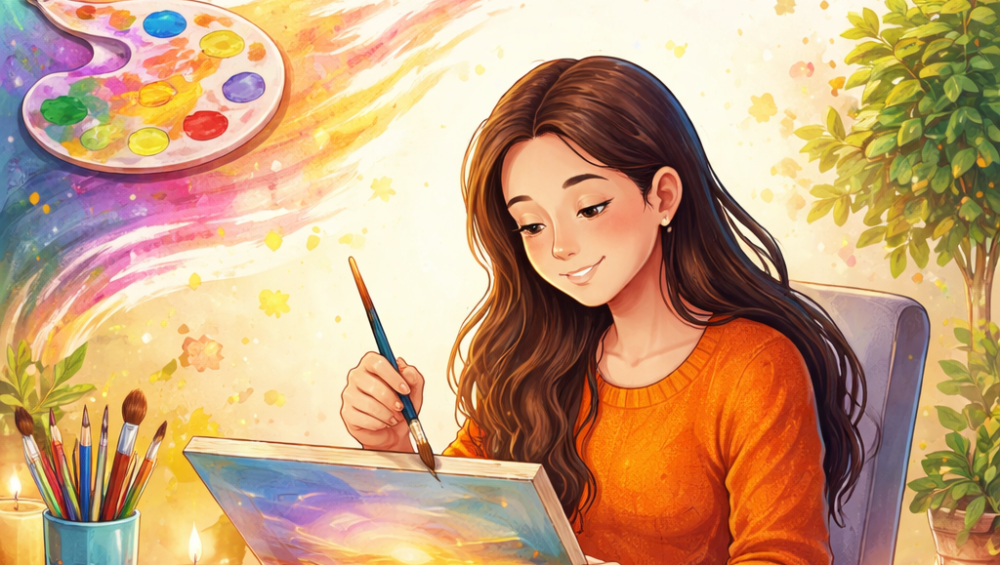
In today’s fast-paced world, many people experience stress, anxiety, and mental pressure. Finding healthy ways to relax and clear the mind is very important for maintaining good mental health. One powerful and enjoyable way to achieve this is through art. Artistic activities such as painting, drawing, music, dancing, or crafting can help calm the mind and bring emotional balance.

Art as a Way to Express Emotions

Art allows people to express their feelings and thoughts in a creative way. Sometimes it is difficult to explain emotions with words, but art provides another way to communicate them. When a person paints or draws, they can express happiness, sadness, anger, or hope through colors and shapes. This emotional expression helps release built-up stress and makes the mind feel lighter.

Improves Focus and Reduces Stress

Another reason art helps calm the mind is that it encourages focus and mindfulness. When people are engaged in creative activities, they concentrate on the process of creating something. This focus helps them forget about worries and negative thoughts for a while. As a result, the mind becomes relaxed and peaceful.

Sense of Achievement

Art also gives a sense of achievement and satisfaction. Completing a drawing, painting, or craft project can make a person feel proud and confident. This positive feeling improves mood and reduces stress. Even simple artistic activities like coloring or doodling can bring joy and relaxation.

In conclusion, art is a powerful tool for calming the mind and reducing stress. It allows people to express emotions, focus their thoughts, and experience happiness through creativity. By including artistic activities in daily life, individuals can improve their mental health and enjoy a more peaceful and balanced life.
Ranggat | Dot Mandala Art: India’s Hidden Gem in the Global Art SceneCategoriesTips & Tricks

Ranggat | The Origins and Meaning of Dot Mandalas Around the World

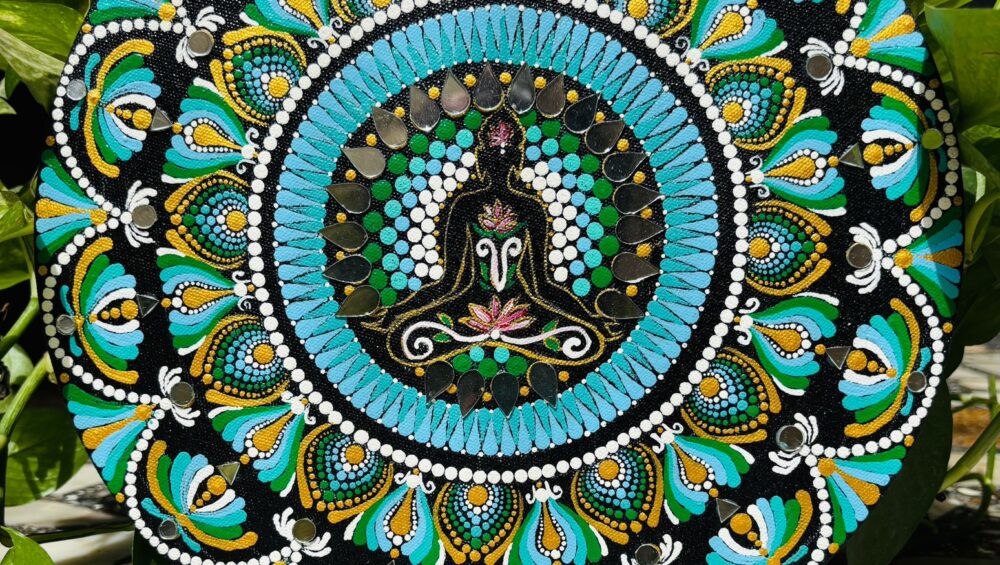
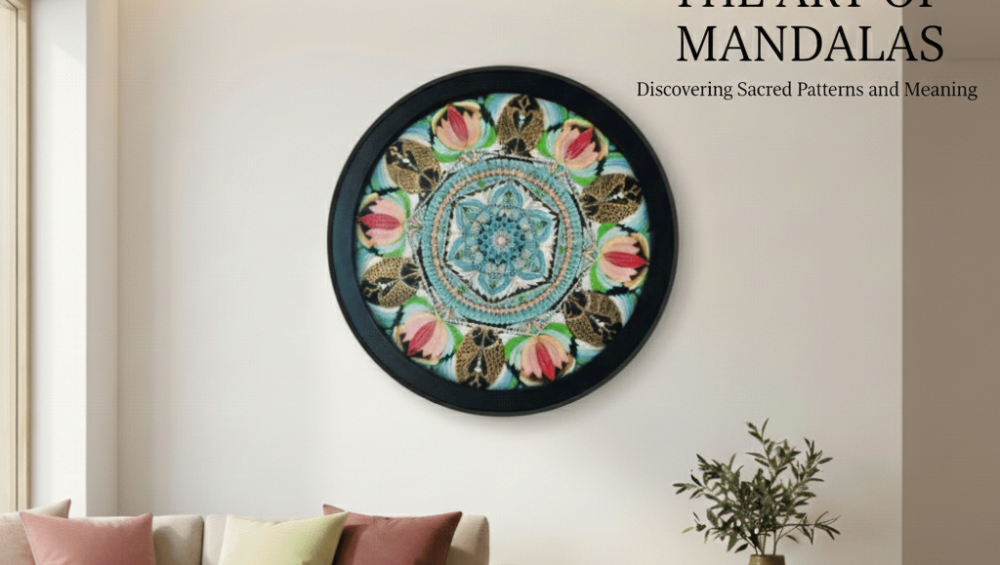
Dot mandalas are captivating pieces of art that blend meditative repetition, vivid colors, and complex patterns. Although they may appear to be straightforward decorative elements at first, each dot, line, and circle has centuries-old cultural and spiritual meaning. Dot mandala have spread across continents from tribal customs to modern art, demonstrating humanity’s continuous attraction with symmetry, symbolism, and attentiveness.

What is a Dot Mandala?

Based from the Sanskrit word for “circle,” a mandala is a symbolic design that stands for unity, balance, and the cosmos. In particular, dot mandalas use dots as the basic building blocks to create complex designs that radiate outward from a center point. To create a sense of depth and harmony, these designs frequently use geometric shapes, floral themes, and layers of color.

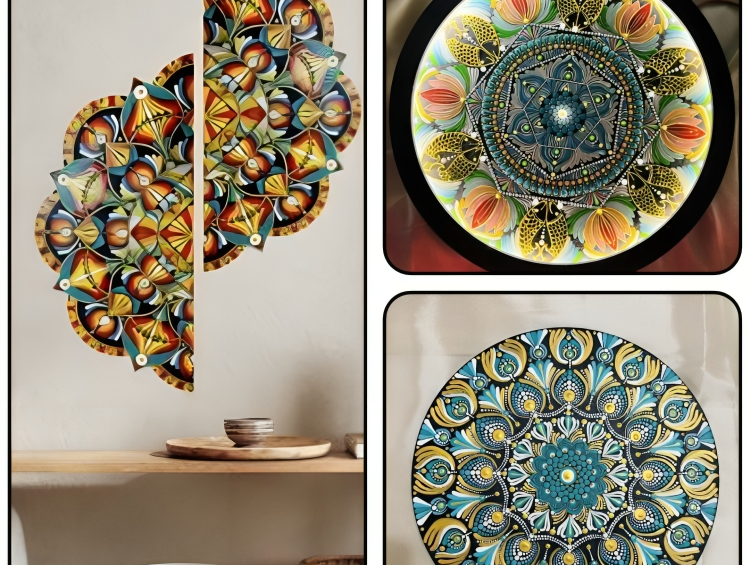
Unlike traditional brush or pencil mandalas, dot mandalas often use tools like styluses, nails, or even cotton swabs to create consistent, circular dots, resulting in a textured, almost tactile visual experience.

Historical Origins

While mandalas are most famously associated with Hinduism and Buddhism in South Asia, dot mandalas have emerged independently in various cultures:

  • Indigenous Australian Art: Dot painting has been a central part of Aboriginal art for thousands of years. These artworks use dots to depict stories, landscapes, and spiritual concepts. The use of dots represents the interconnectedness of life and often encodes ancestral knowledge and cultural narratives.
  • Tibetan and Hindu Traditions: Mandalas in Tibetan Buddhism and Hinduism are spiritual tools for meditation, representing the cosmos and the path to enlightenment. Monks create elaborate mandalas using colored sand, where each grain acts as a symbolic dot, demonstrating impermanence and devotion.
  • Modern Western Adaptations: In recent decades, dot mandalas have gained popularity as a therapeutic art form, blending traditional symbolism with contemporary design aesthetics. Artists around the world now create dot mandalas as part of mindfulness practices, home décor, and personal expression.

The Symbolism Behind Dot Mandalas

Dot mandalas carry deep symbolism:

  • Circles represent wholeness, eternity, and unity.
  • Dots emphasize individuality within the collective, illustrating how small actions contribute to a larger whole.
  • Symmetry reflects balance, harmony, and the interconnectedness of life.
  • Colors often have specific meanings—red for energy, blue for calm, yellow for joy, and green for growth.

For many, creating or observing dot becomes a meditative practice, encouraging focus, self-reflection, and emotional healing.

Dot Mandalas in Contemporary Culture

Nowadays, dot mandalas are praised worldwide for both their aesthetic appeal and their therapeutic qualities. Thanks to workshops, do-it-yourself kits, and social media platforms that showcase artists from diverse backgrounds, the art form is accessible to everybody. They are used in classrooms, meditation rooms, and even corporate wellness programs to foster awareness and creativity.

mandala are a celebration of human creativity, an aid for meditation, and a bridge across civilizations in addition to being beautiful works of art. mandalas, which can be seen in anything from the hallowed sands of Tibetan temples to the vibrant paintings of contemporary artists, serve as a reminder that every tiny action—like a single dot—contributes to a greater, harmonious total.

ranggat Dot mandala connect us to a timeless global heritage that embodies beauty, harmony, and mindfulness in every circle, whether you make them for creative expression, spiritual contemplation, or just the pleasure of creating patterns.

Exquisite Dot Mandala Frames: Handcrafted Wall Art for Home & Office DecorCategoriesCreative

Dot Mandala Art Therapy: Reduce Stress Through Creative Patterns

Dot Mandala art therapy is a creative and therapeutic approach that use symmetrical, circular designs, or mandalas, to enhance focus, lower stress levels, and support mental health. The word “Dot mandala” is derived from the Sanskrit word “circular,” which denotes balance and wholeness. Drawing, coloring, or painting on a mandala allows people to explore their emotions and quiet their minds by combining artistic expression with attentive focus.

How Dot Mandala Art Reduces Stress and Anxiety

1. Encourages Mindfulness and Present‑Moment Awareness


When you work on a Dot mandala, your attention turns to the patterns, shapes, and colors in front of you. This focus naturally shifts your awareness away from stressors and brings you into the present moment — a core element of mindfulness practice. The repetitive activity of coloring or drawing induces a meditative state similar to focused breathing or relaxation exercises.

2. Promotes Relaxation and the “Relaxation Response”

Researchers describe a relaxation response — a physiological shift that lowers stress hormone levels, reduces muscle tension, and slows heart rate — similar to what happens during meditation or deep breathing. Dot Mandala creation encourages this response through focused, rhythmic movements, helping calm the nervous system.

3. Lowers Anxiety and Emotional Tension


Studies show that coloring or creating Dot mandalas can reduce anxiety more effectively than free‑form drawing — likely because the structured design provides just enough guidance to settle anxious thoughts and reduce distraction.

4. Helps with Emotional Regulation and Self‑Expression


Dot Mandalas are not just patterns — they can reflect inner emotional states. As individuals choose colors and shapes, they often express feelings that words can’t capture. This non‑verbal expression can help process complex emotions, offering insight and relief.

Psychological and Cognitive Benefits

• Enhanced Focus and Concentration


Working on detailed Dot mandala patterns requires attention to detail and steady engagement. Over time, this improves concentration and mental discipline — which can make coping with daily tasks less stressful.

• Supports Emotional Healing and Integration


Carl Jung, a pioneer in psychology, viewed Dot mandala creation as a window into the unconscious mind. He used it to help clients explore their inner world, integrate various parts of the self, and achieve psychological balance.

• Facilitates a Calming Ritual


Even short sessions — as little as 5–10 minutes of Dot mandala coloring — can provide a “pattern interrupt” that breaks cycles of rumination and stress. Integrating mandala practice into a daily routine can support long‑term emotional balance.

Practical Ways to Practice Dot Mandala Art Therapy

Here are some ways to use Dot mandalas for stress relief and creativity:

  • Color pre‑drawn Dot mandala templates — ideal for beginners or when you need a quick calming activity.
  • Draw your own Dot mandalas — create from scratch using a compass or simple circular patterns.
  • Use different mediums — colored pencils, markers, paints, or even digital tools.
  • Set a calm environment — soft music, quiet space, and mindful breathing enhance the therapeutic effect.
  • Reflect afterward — notice how you feel; writing brief thoughts can deepen self‑awareness.

Dot Mandala art therapy is a lovely way to combine mindfulness and creativity. Dot Mandalas help lower stress and enhance emotional well-being by focusing the mind, relaxing the nervous system, and providing an expressive outlet for emotions. Mandala art offers a straightforward yet profound practice with roots in both psychology and tradition, whether you’re looking for stress relief, an increase in focus, or a route to self-discovery.

dot mandalaCategoriesCreative Lifestyle Tips & Tricks Uncategorized

Ranggat | Decoding the Forgotten Language of Dots, Circles, and Silence

We have forgotten how to listen to what does not speak out loud in a world full with words, pictures, and incessant noise. Humans used simple, intentional, and deep markings to communicate long before alphabets, scripts, and displays. Circles and dots. Quiet. Subtle but potent, this old visual language is still present on the periphery of our consciousness, just waiting to be recalled.

The Dot: The Beginning of Meaning

Despite being the smallest mark, the dot has a great deal of weight. It has represented origin, presence, and consciousness in many civilizations. The center of existence, where everything originates, is represented by a dot in many indigenous traditions. Before creation, it is the breath and the seed.

According to Indian philosophy, the bindu is the place where form, space, and time all vanish into pure potential. Dots map ancestry, geography, and stories to create complete cosmologies in Aboriginal art. A single dot is a statement that something is present and is never only decorative.

The Circle: Wholeness Without Words

The circle represents continuity if the dot represents the start. The circle, which has no beginning or end, represents cycles, including life, death, rebirth, seasons, and breath. In order to coordinate with the universe rather than to explain it, ancient tribes created circles in sand, carved them into stone, and erected monuments around them.

Mandalas, medicine wheels, halos, and ceremonial areas all have circles. They link, confine, and safeguard. Circles imply return, whereas straight lines imply direction and advancement. They serve as a reminder that finding meaning sometimes involves returning to oneself, the natural world, and quiet.

Silence: The Space Between Symbols

Silence may be the most overlooked language of all. It’s presence without sound, not absence. Symbols may breathe when there is silence. A dot is invisible in the absence of silence, while a circle turns into noise in the absence of stillness.

Why We Forgot

Certainty, explanation, and speed are important in today’s world. We are taught to inquire about the meaning of this. rather than how this makes me feel. It is difficult to convert the language of dots and circles into words. It calls for presence, patience, and intuition—skills we have overlooked.

Technology lowered our perception while amplifying our voices. Symbols evolved into aesthetics. Absence replaced silence. The sacred turned into a decorative element.

Remembering the Language

Remembering this lost language means balancing words rather than giving them up. It is to acknowledge that meaning can exist even in the absence of explanation. A moment of stillness, a circle sketched in dust, or a dot on a canvas are not incomplete messages. They are comprehensive encounters.

Mindful observation, meditation, and art are ways to return to this language. The symbols start to speak again when we slow down and give ourselves permission to sit simply—not in words, but in feelings.

The language of circles, dots, and stillness was merely disregarded rather than completely forgotten. It can be found in the patterns seen in nature, in historical artwork, and in the silent moments we pass quickly. It takes attention, humility, and silence in addition to intelligence to decipher it.

CategoriesCreative

The Power of Mantra Art: How Sacred Words Transform Your Space and Mind

The Power of Mantra Art: How Sacred Words Transform Your Space and Mind

In a world full of distractions and chaos, finding harmony and tranquility in our surroundings has become crucial. Art has traditionally been a healing and expressive medium. When combined with sacred mantras, it produces a powerful combination that changes our minds and spaces. The mantra-inspired pieces of Ranggat are meant to fill your life with happiness, harmony, and calm since we think that art has a spiritual component.

The Spiritual and Psychological Impact of Mantra Art

A mantra is a sacred word, phrase, or syllable that has deep spiritual significance and vibrational energy. These powerful symbols, when used in artwork, act as a constant reminder of inner strength, serenity, and awareness. According to scientific research, people’s emotions and cognitive processes are influenced by visual stimuli. You can create a positive and spiritually inspiring atmosphere in your home by incorporating mantra art.

How Mantra Art Elevates Your Space

The Power of Mantra Art: How Sacred Words Transform Your Space and Mind

Promotes Positivity and Mindfulness
Mantra art acts as a visual signal for meditation and mindfulness, helping to shift thoughts toward serenity and self-awareness.

Enhances Aesthetic and Spiritual Appeal
Mantra art, which combines elaborate patterns with sacred words, not only improves the interior design of a room but also increases its spiritual quality.

Creates a Healing Ambience
The vibrations associated with sacred mantras are believed to bring tranquility and healing, making your space a sanctuary of peace.

Boosts Energy and Focus
Mantras that are specifically designed to enhance focus, creativity, and clarity are ideal for study areas and workspaces.

    Choosing the Right Mantra Art for Your Space

    The energy you want to cultivate and your unique beliefs will determine which mantra art is best for you. These are a few well-liked options:

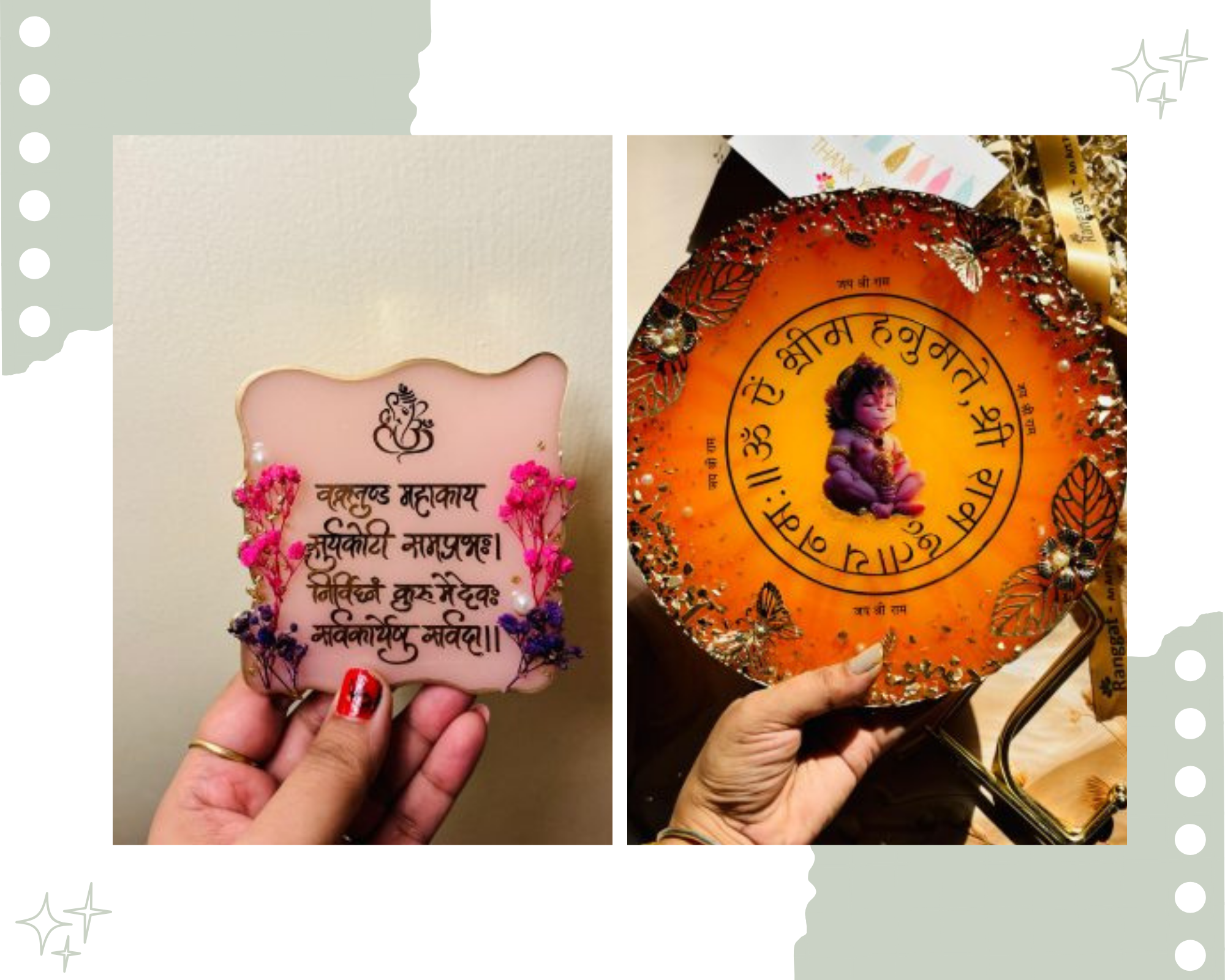
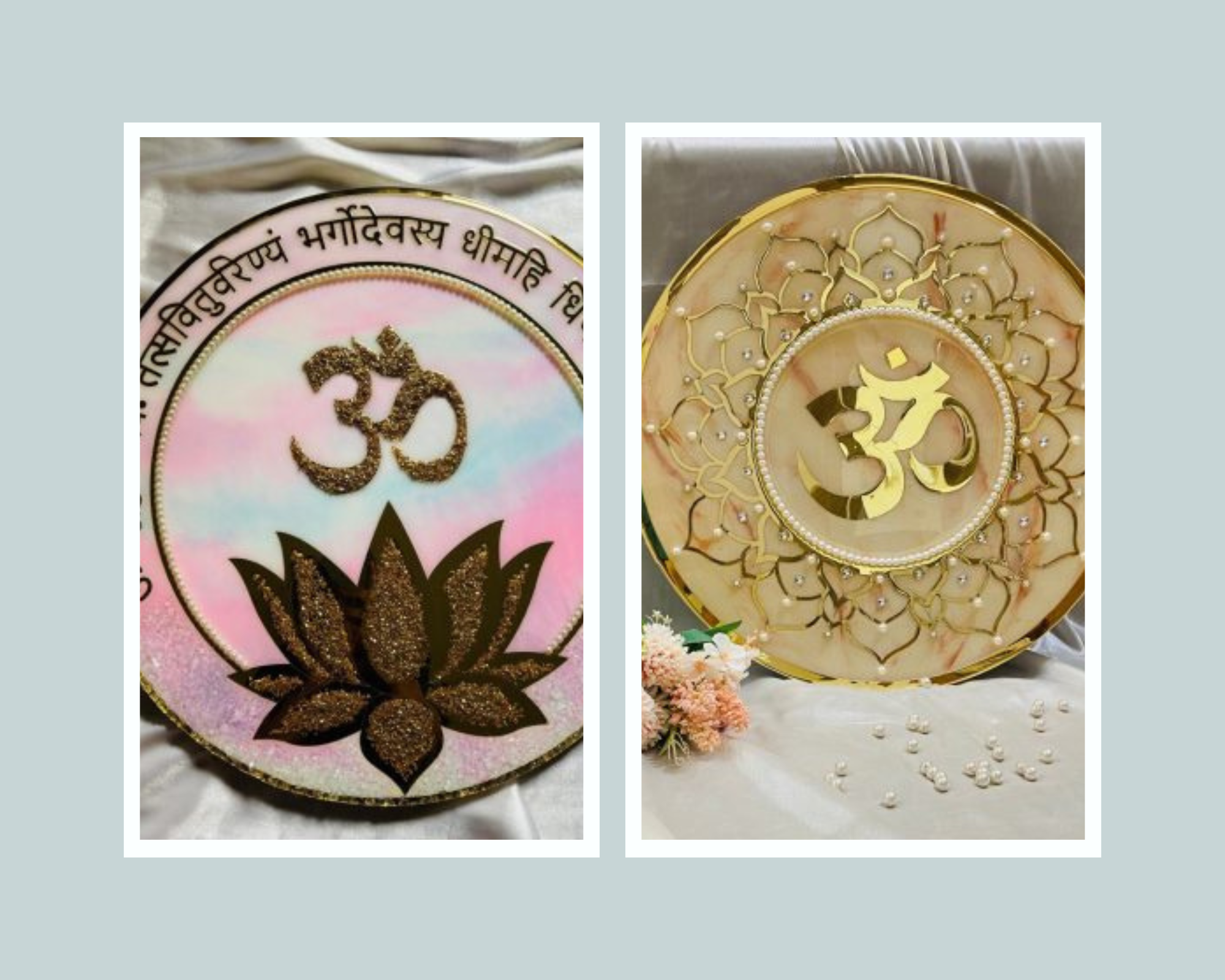
    • Om (ॐ): Represents the universe’s primordial sound, bringing harmony and spiritual awareness.
    • Gayatri Mantra: Invokes wisdom and enlightenment.
    • Ganesh Mantra: Connected to inner peace and compassion.
    • Hanumanji Mantra: Enhances tranquility and removes obstacles.

    Why Ranggat’s Mantra Art is Special

    At Ranggat, we use artistic precision and deep intention to create mantra art. Each piece is expertly made with premium materials and colorful designs that enhance any room while also reflecting spiritual depth. Whether you are searching for a piece of art to add to your home, office, or meditation space, our collection fills your environment with the essence of heavenly energy.