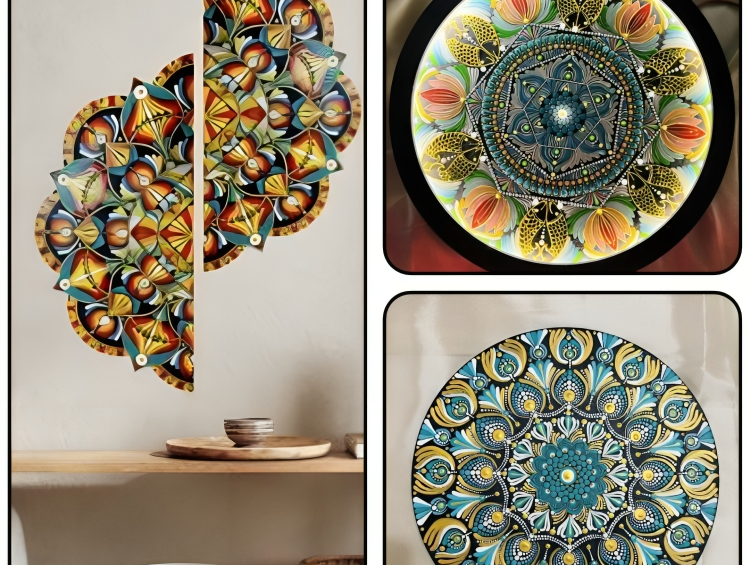
Dot Mandala art therapy is a creative and therapeutic approach that use symmetrical, circular designs, or mandalas, to enhance focus, lower stress levels, and support mental health. The word “Dot mandala” is derived from the Sanskrit word “circular,” which denotes balance and wholeness. Drawing, coloring, or painting on a mandala allows people to explore their emotions and quiet their minds by combining artistic expression with attentive focus.
How Dot Mandala Art Reduces Stress and Anxiety
1. Encourages Mindfulness and Present‑Moment Awareness
When you work on a Dot mandala, your attention turns to the patterns, shapes, and colors in front of you. This focus naturally shifts your awareness away from stressors and brings you into the present moment — a core element of mindfulness practice. The repetitive activity of coloring or drawing induces a meditative state similar to focused breathing or relaxation exercises.
2. Promotes Relaxation and the “Relaxation Response”
Researchers describe a relaxation response — a physiological shift that lowers stress hormone levels, reduces muscle tension, and slows heart rate — similar to what happens during meditation or deep breathing. Dot Mandala creation encourages this response through focused, rhythmic movements, helping calm the nervous system.
3. Lowers Anxiety and Emotional Tension
Studies show that coloring or creating Dot mandalas can reduce anxiety more effectively than free‑form drawing — likely because the structured design provides just enough guidance to settle anxious thoughts and reduce distraction.
4. Helps with Emotional Regulation and Self‑Expression
Dot Mandalas are not just patterns — they can reflect inner emotional states. As individuals choose colors and shapes, they often express feelings that words can’t capture. This non‑verbal expression can help process complex emotions, offering insight and relief.
Psychological and Cognitive Benefits
• Enhanced Focus and Concentration
Working on detailed Dot mandala patterns requires attention to detail and steady engagement. Over time, this improves concentration and mental discipline — which can make coping with daily tasks less stressful.
• Supports Emotional Healing and Integration
Carl Jung, a pioneer in psychology, viewed Dot mandala creation as a window into the unconscious mind. He used it to help clients explore their inner world, integrate various parts of the self, and achieve psychological balance.
• Facilitates a Calming Ritual
Even short sessions — as little as 5–10 minutes of Dot mandala coloring — can provide a “pattern interrupt” that breaks cycles of rumination and stress. Integrating mandala practice into a daily routine can support long‑term emotional balance.
Practical Ways to Practice Dot Mandala Art Therapy
Here are some ways to use Dot mandalas for stress relief and creativity:
- Color pre‑drawn Dot mandala templates — ideal for beginners or when you need a quick calming activity.
- Draw your own Dot mandalas — create from scratch using a compass or simple circular patterns.
- Use different mediums — colored pencils, markers, paints, or even digital tools.
- Set a calm environment — soft music, quiet space, and mindful breathing enhance the therapeutic effect.
- Reflect afterward — notice how you feel; writing brief thoughts can deepen self‑awareness.
Dot Mandala art therapy is a lovely way to combine mindfulness and creativity. Dot Mandalas help lower stress and enhance emotional well-being by focusing the mind, relaxing the nervous system, and providing an expressive outlet for emotions. Mandala art offers a straightforward yet profound practice with roots in both psychology and tradition, whether you’re looking for stress relief, an increase in focus, or a route to self-discovery.