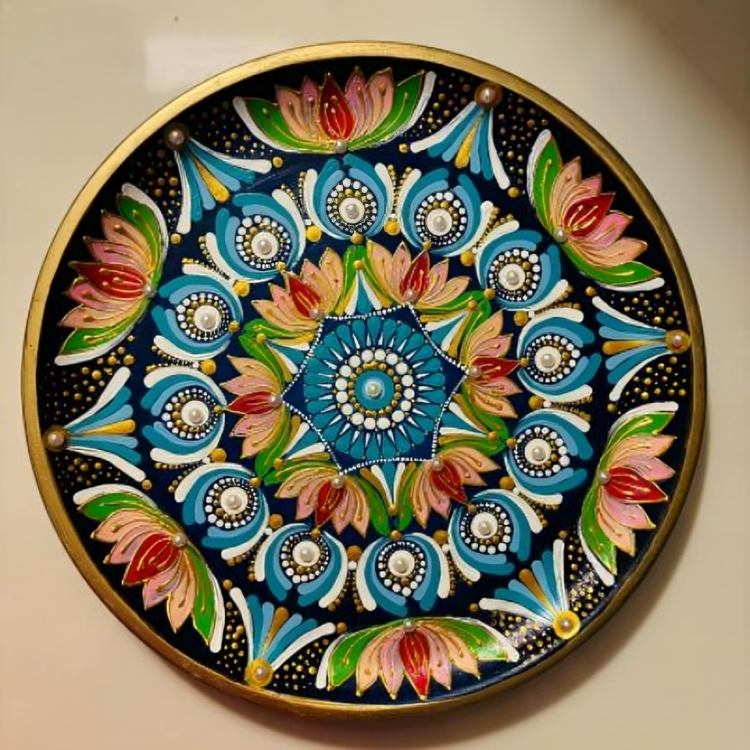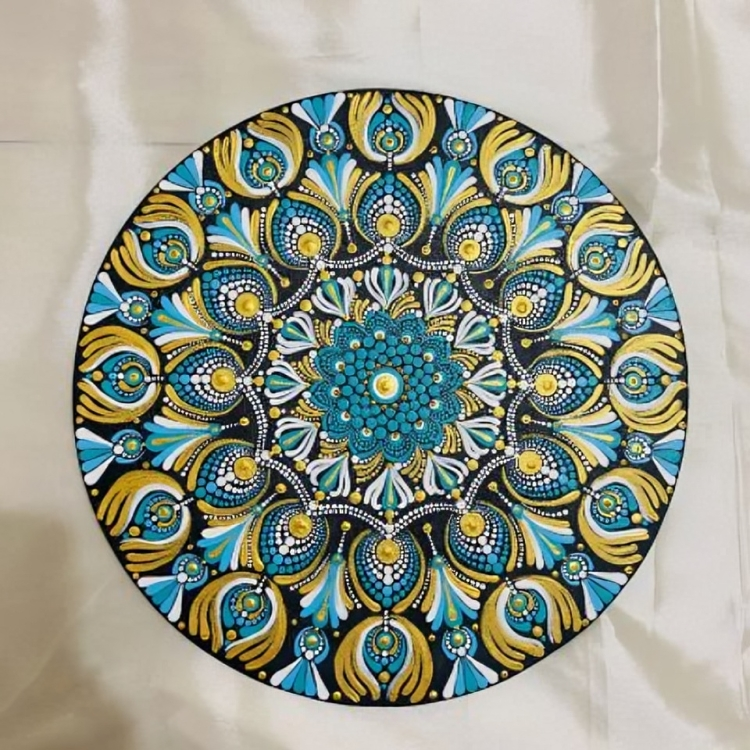
Exquisite Dot Mandala Frames: Handcrafted Wall Art for Home & Office DecorCategoriesCreative

Dot Mandala Art Therapy: Reduce Stress Through Creative Patterns

Dot Mandala art therapy is a creative and therapeutic approach that use symmetrical, circular designs, or mandalas, to enhance focus, lower stress levels, and support mental health. The word “Dot mandala” is derived from the Sanskrit word “circular,” which denotes balance and wholeness. Drawing, coloring, or painting on a mandala allows people to explore their emotions and quiet their minds by combining artistic expression with attentive focus.

How Dot Mandala Art Reduces Stress and Anxiety

1. Encourages Mindfulness and Present‑Moment Awareness


When you work on a Dot mandala, your attention turns to the patterns, shapes, and colors in front of you. This focus naturally shifts your awareness away from stressors and brings you into the present moment — a core element of mindfulness practice. The repetitive activity of coloring or drawing induces a meditative state similar to focused breathing or relaxation exercises.

2. Promotes Relaxation and the “Relaxation Response”

Researchers describe a relaxation response — a physiological shift that lowers stress hormone levels, reduces muscle tension, and slows heart rate — similar to what happens during meditation or deep breathing. Dot Mandala creation encourages this response through focused, rhythmic movements, helping calm the nervous system.

3. Lowers Anxiety and Emotional Tension


Studies show that coloring or creating Dot mandalas can reduce anxiety more effectively than free‑form drawing — likely because the structured design provides just enough guidance to settle anxious thoughts and reduce distraction.

4. Helps with Emotional Regulation and Self‑Expression


Dot Mandalas are not just patterns — they can reflect inner emotional states. As individuals choose colors and shapes, they often express feelings that words can’t capture. This non‑verbal expression can help process complex emotions, offering insight and relief.

Psychological and Cognitive Benefits

• Enhanced Focus and Concentration


Working on detailed Dot mandala patterns requires attention to detail and steady engagement. Over time, this improves concentration and mental discipline — which can make coping with daily tasks less stressful.

• Supports Emotional Healing and Integration


Carl Jung, a pioneer in psychology, viewed Dot mandala creation as a window into the unconscious mind. He used it to help clients explore their inner world, integrate various parts of the self, and achieve psychological balance.

• Facilitates a Calming Ritual


Even short sessions — as little as 5–10 minutes of Dot mandala coloring — can provide a “pattern interrupt” that breaks cycles of rumination and stress. Integrating mandala practice into a daily routine can support long‑term emotional balance.

Practical Ways to Practice Dot Mandala Art Therapy

Here are some ways to use Dot mandalas for stress relief and creativity:

  • Color pre‑drawn Dot mandala templates — ideal for beginners or when you need a quick calming activity.
  • Draw your own Dot mandalas — create from scratch using a compass or simple circular patterns.
  • Use different mediums — colored pencils, markers, paints, or even digital tools.
  • Set a calm environment — soft music, quiet space, and mindful breathing enhance the therapeutic effect.
  • Reflect afterward — notice how you feel; writing brief thoughts can deepen self‑awareness.

Dot Mandala art therapy is a lovely way to combine mindfulness and creativity. Dot Mandalas help lower stress and enhance emotional well-being by focusing the mind, relaxing the nervous system, and providing an expressive outlet for emotions. Mandala art offers a straightforward yet profound practice with roots in both psychology and tradition, whether you’re looking for stress relief, an increase in focus, or a route to self-discovery.
Ranggat: Why Sacred Art Was Never Meant to Be LoudCategoriesCreative

Ranggat: Why Sacred Art Was Never Meant to Be Loud

Sacred art has always spoken in a quiet voice. It does not try to impress or demand attention. Instead, it invites us to slow down, look closely, and feel something deeper. Ranggat represents this gentle spirit — art that carries meaning through silence, balance, and care.

Across cultures, sacred art was created for reflection, not display. It was meant to be experienced slowly, often in peaceful places like temples, churches, or natural spaces. Its purpose was never to be loud, but to guide the heart inward.

The Beauty of Quiet Expression

Sacred art often uses soft colors, simple forms, and careful details. These choices are intentional. They help create a sense of calm and focus. A small symbol, a delicate carving, or a single line of calligraphy can hold deep meaning without needing explanation.

This quiet approach allows the viewer to connect personally with the art. There is no pressure to understand everything at once. The art waits patiently, offering its message when the viewer is ready.

Why Loudness Does Not Belong

Loud art seeks attention. Sacred art seeks presence. When something is too bold or overwhelming, it can distract the mind. Sacred art does the opposite — it clears space for thought, prayer, and stillness.

In many traditions, silence is seen as powerful. Sacred art respects this silence. It works alongside it, not against it.

Sacred Art in the Modern World

Today, we live in a fast and noisy world. Images flash by quickly, and everything competes for attention. Sacred art feels different because it asks us to pause. It reminds us that not everything meaningful needs to be seen or heard immediately.

Ranggat teaches us that quiet art can still be strong. Its power lies in how it makes us feel — calm, grounded, and connected.

A Gentle Reminder

Sacred art was never meant to shout. It was meant to whisper. Through simplicity and silence, it carries wisdom that lasts. In listening to its quiet voice, we may also learn how to listen to ourselves.

CategoriesCreative

Digital Detox: Why You Should Spend 10 Minutes with Mandala Daily

Mandala Art

In the modern world of fast-paced technology, a digital detox is not just a luxury but also a need. Screen exhaustion, constant notifications, and endless scrolling can all negatively impact our mental health, so even a 10-minute break might be quite beneficial. And working with a mandala for a few quiet moments each day is the best way to refresh your thoughts.

At Ranggat, we think that art is for the soul, not simply for walls. Our collections of mandala art are designed to help you find your center, reestablish your connection to yourself, and practice mindfulness every day.

Why Digital Detox Matters

  • Reduces Anxiety and Stress: Continuous digital stimulation can cause brain overload. Short breaks help people maintain their emotional balance and dramatically reduce stress levels.
  • Boosts Focus and Creativity: Even a short break from screens can boost creativity and cognitive performance.
  • Enhances Sleep Quality: Reducing screen time enhances sleep patterns and melatonin levels, particularly before bed.
  • Promotes Mindful Living: Having a few tech-free moments encourages deeper awareness, gratitude, and intentionality.

The Healing Power of Mandala Art

The Sanskrit word mandala, which means “circle,” represents harmony, wholeness, and togetherness. Making or looking at mandalas is a type of art therapy in many cultures. Here are some benefits of using a mandala for ten minutes every day:

  • Calm Your Mind: Deep breathing and relaxation are promoted by following the complex designs of a mandala or just by looking at one.
  • Enhance Focus: Like meditation techniques, mandalas naturally direct your attention to the center, improving focus.
  • Spark Inner Joy: The symmetrical patterns and bright colors uplift the mood and create pleasant feelings.
  • Reconnect with Yourself: You re-align with your inner self during those ten minutes of quietness, away from digital distractions.

How to Start Your Mandala Moment

1) Choose a Quiet Space: Find a cozy corner where you won’t be interrupted.

2) Pick a Mandala: Choose an item that speaks to you from Ranggat’s Mandala Collection.

3) Set a Timer: It only takes ten minutes to feel refreshed.

4) Observe or Color: Observing the patterns in a quiet manner or coloring a mandala are both therapeutic approaches.

5) Breathe Deeply: Let go of stress with each breath as you immerse yourself in the beauty of the design.

    Why Choose Ranggat’s Mandala Art?

    • Handcrafted with Soul: Each piece at Ranggat is carefully made by fusing traditional methods with modern elements.
    • Premium Quality: Our wall mantra frames are a classic complement to your room since they are made to last.
    • Authentic Artistic Expression: Founder Suruchi Purwar infuses every artwork with deep emotion and cultural authenticity, offering not just decoration but healing energy.
    • Perfect for Modern Living: Ranggat’s mandalas are your own window to tranquility, whether you are using them in your home space, office, or meditation space.

    Mandala art combined with a 10-minute daily digital detox is a simple adjustment that can have significant advantages. One mandala moment at a time, regain your composure, take care of your thoughts, and bring more beauty into your day.

    Explore Ranggat’s Mandala Collection today and start your journey towards mindful living.

    CategoriesTips & Tricks

    Using Art for Mindfulness: How Mandalas Can Help You Meditate

    Using Art for Mindfulness: How Mandalas Can Help You Meditate

    As an artist, I have always been attracted to shapes and designs that convey harmony, flow, and balance. Making and reflecting on mandalas is one of the most effective ways to cultivate personal attention and meditation, as I have found over the years. More than just beautiful expressions, these elaborate, circular patterns serve as portals to inner peace, assisting us in focusing, slowing down, and developing a close relationship with ourselves.

    What Is a Mandala?

    The word “mandala,” which means “circle,” originates from the ancient Sanskrit language. Mandalas, which are geometric patterns that symbolize the world, wholeness, and the infinite, have long been used in spiritual rituals across many cultures, especially in Buddhism and Hinduism. Their symmetrical designs, which radiate from a central point, represent an inward journey toward the center of one’s being.

    As an artist, I see mandalas as a reflection of the soul. Our thoughts, feelings, and deepest wishes are all reflected in every design. Making a mandala or just looking at one can be a kind of meditation that promotes calmness and a close awareness of the present moment.

    The Process of Creating a Mandala as a Meditative Practice

    Using Art for Mindfulness: How Mandalas Can Help You Meditate

    Making a mandala is an immersive experience and a conscious mindfulness activity, in my opinion. With an intention and a blank canvas, the process starts. Drawing the first circle feels like a declaration of my commitment to the present moment. Like a mirror of my inner world unfolding before my eyes, the mandala slowly takes shape as I add patterns, shapes, and colors.

    Mandalas as a Tool for Meditation

    Mandalas are a powerful tool for awareness, even if you do not think of yourself as an artist. Coloring an already-made mandala can be as relaxing as creating your own. For people who are afraid of a blank canvas, it offers an approachable method of practicing mindfulness via art.

    How to Meditate with Mandalas:

    1) Set an Intention: Spend some time establishing a clear intention before you begin. Allow that goal to guide your approach, whether it is to reduce anxiety, find clarity, or simply relax.

    2) Breathe and Begin: As you color or draw, pay attention to your breathing. Take a breath as you get about to leave your mark, then release it as you do. Sync your hand movements with your breathing.

    3) Stay Present: If your thoughts wander, gently remind yourself of the mandala’s specifics. Without passing judgment, take in the patterns, colors, and lines.

    4) Contemplate the Finished Mandala: When you finish, take a seat quietly and look at your creation. What emotions or thoughts come up? Does the journey you have taken during the process or a specific state of mind come through in the mandala?

    The Healing Power of Mandalas

    From the perspective of an artist, mandalas are more than just healing tools; they are creative expressions that speak to our innermost selves. The journey from disorder to order, fragmentation to wholeness, and tension to peace can all be compared to the process of creating a mandala.

    Mandalas serve as a helpful reminder that growth and healing are circular processes that include relocating to our core. They teach us the value of accepting the present moment as it is, patience, and presence.

    An Invitation to Create

    I encourage everyone to explore the world of mandalas, regardless of whether they are artists, meditation enthusiasts, or just someone searching for a fresh approach to finding serenity. A pencil, an open heart, and the desire to lose yourself in the creative process are all you need—no specific knowledge or equipment.

    In the center of a mandala lies stillness, and in that stillness, you might just find yourself.