
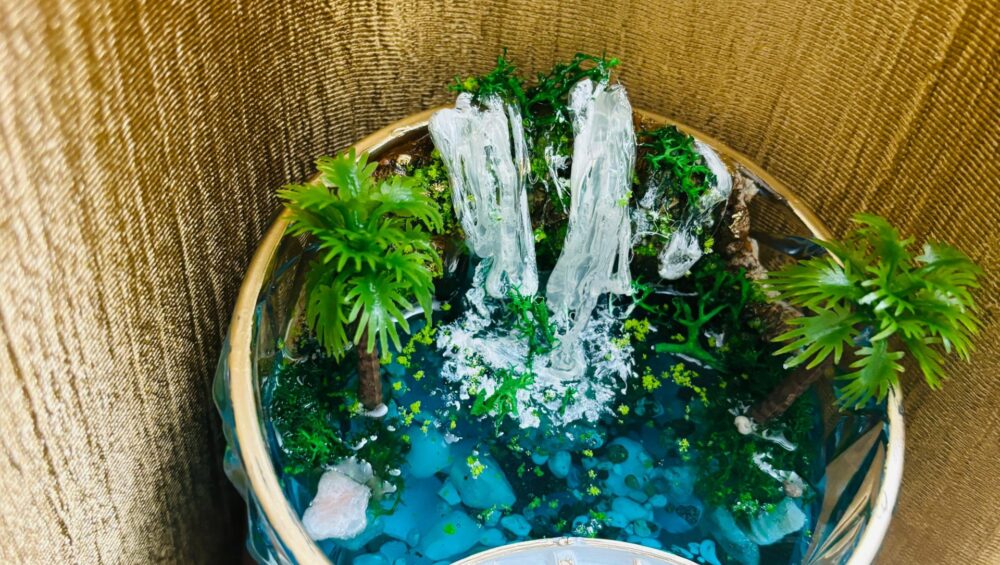
Waterfall in a Glass: Turning Everyday Decor into Living ArtCategoriesCreative

Waterfall in a Glass: Turning Everyday Decor into Living Art

In a world where home decor often walks the line between functional and forgettable, certain pieces stand out—not just as objects, but as experiences. “Waterfall in a Glass” is one such creation. It blurs the boundary between art and decor, transforming an ordinary living space into something immersive, calming, and visually captivating.

The Beauty of Motion, Frozen in Time

What makes waterfall-inspired glass decor so unique is its ability to capture motion without actually moving. The design mimics the gentle cascade of water, creating an illusion of flow within a solid structure. This interplay between stillness and movement gives the piece a dynamic quality—almost as if time itself has been paused mid-stream.

Light plays a crucial role here. As it passes through the textured glass, it refracts and scatters, enhancing the “flowing” effect. The result is a constantly changing visual depending on the angle, lighting, and time of day.

More Than Decor—An Experience

Unlike traditional decorative items that simply occupy space, a waterfall glass piece engages the senses. It invites you to pause, observe, and appreciate subtle details. The soothing aesthetic can evoke feelings of calmness similar to watching real flowing water—making it a perfect addition to spaces meant for relaxation, like living rooms, bedrooms, or even office corners.

It’s not just something you place on a shelf—it becomes a focal point, a conversation starter, and a source of quiet inspiration.

Elevating Everyday Spaces

Modern interior design increasingly leans toward minimalism, where each piece must justify its presence. In such settings, a “Waterfall in a Glass” stands out effortlessly. Its elegance complements clean lines and neutral palettes, while its artistic nature adds depth and personality.

Whether placed near natural light, under warm ambient lighting, or as part of a curated decor setup, it adapts beautifully. It doesn’t overpower the room—it enhances it.

The Fusion of Craftsmanship and Creativity

Behind every waterfall glass design lies a blend of craftsmanship and artistic vision. The precision required to shape glass into fluid-like forms is no small feat. Each curve and texture is intentional, designed to replicate nature’s effortless beauty through a man-made medium.

This fusion of art and technique is what elevates the piece from simple decor to a collectible form of modern art.

A Statement of Taste and Individuality

In a time where mass-produced decor dominates the market, choosing something like a waterfall glass piece reflects a deeper appreciation for design. It signals a preference for uniqueness, for items that tell a story rather than just fill a gap.

It’s subtle, yet impactful. Minimal, yet expressive.

Waterfall in a Glass” isn’t just about aesthetics—it’s about creating an atmosphere. It turns an everyday environment into something more thoughtful, more serene, and more alive.

In the end, the true value of such a piece lies not just in how it looks, but in how it makes you feel. And that’s what transforms decor into living art.

CategoriesCreative Tips & Tricks

The Do’s and Don’ts of Hanging Wall Art

The Art of Placement: How to Position Frames on Your Wall

Hanging wall art in your room is a great way to show off your sense of style. A place can feel more alive when it is decorated with art, whether it is in the living room, office, or bedroom. However, there are a few rules to follow to make sure your wall art is put up correctly and looks beautiful. The dos and don’ts of hanging wall art are as follows.

Dos:

1) Do Consider the Room’s Size and Layout: Before hanging any artwork, consider the piece’s size in relation to the size of the room. Bigger pieces can fit in larger spaces, but smaller spaces could call for more delicate, smaller artwork. For example, a little picture may be hidden in a huge area, whereas a large painting may overshadow a small space.

2) Do Hang Art at Eye Level: Art should generally be hung at eye level for best viewing. Typically, this entails positioning the piece’s center between 57 and 60 inches above the floor. A little lower positioning could be more beneficial for balance in spaces with a lot of furniture or a low ceiling.

3) Do Group Art Pieces for Impact: Grouping smaller items together or assembling them into a gallery wall can create a striking effect. To bring several items together, use a recurring theme or color palette. Depending on your style, you can either arrange them in a grid pattern or in a more natural, flowing style.

4) Do Measure and Plan Before Hanging: To make sure the positioning is accurate, measure the wall area and the artwork. To gain a visual idea of the layout before drilling holes, make a mock-up of the artwork on the wall using painter’s tape.

5) Do Use Proper Hanging Hardware: Always choose hanging hardware that is appropriate for the weight of your artwork. Picture hooks or anchors work well for heavier items. For simpler designs, traditional nails could be sufficient. This prevents any possible damage to your walls and guarantees that the artwork remains securely in place.

    Don’ts:

    1) Don’t Hang Art Too High: Hanging art too high can make the space feel unbalanced. It’s easy to place it right under the ceiling, but this can create a disconnected and awkward feeling. Keeping it at eye level helps create harmony with the rest of the room’s decor.

    2) Don’t Overcrowd Your Wall: While it’s easy to occupy every inch of wall space, overcrowding can make the room feel cluttered. Leave space between pieces to allow each artwork to breathe and stand out on its own.

    3) Don’t Forget the Framing: The overall look of your artwork can be significantly impacted through its frame. Do not use cheap, mismatched frames because they can take away from the artwork. Select frames that go well with the artwork and the overall decor of the space instead.

    4) Don’t Rely on Nails Alone for Heavy Art: Heavy art may not be properly supported with nails. Always use picture hooks, wall anchors, or screws made especially to support the weight of the artwork. This helps prevent accidents and ensures your pieces remain securely hung.

    5) Don’t Neglect Lighting: When displaying wall art, lighting is important. Avoid placing art in areas with poor lighting since it may be difficult to see the details. To draw attention to the artwork, think about adding floor lamps or movable picture lights.