Rangaat | Handmade Art That Tells a Story: Why Conscious Craft Matters TodayCategoriesCreative Tips & Tricks

Rangaat | Handmade Art That Tells a Story: Why Conscious Craft Matters Today

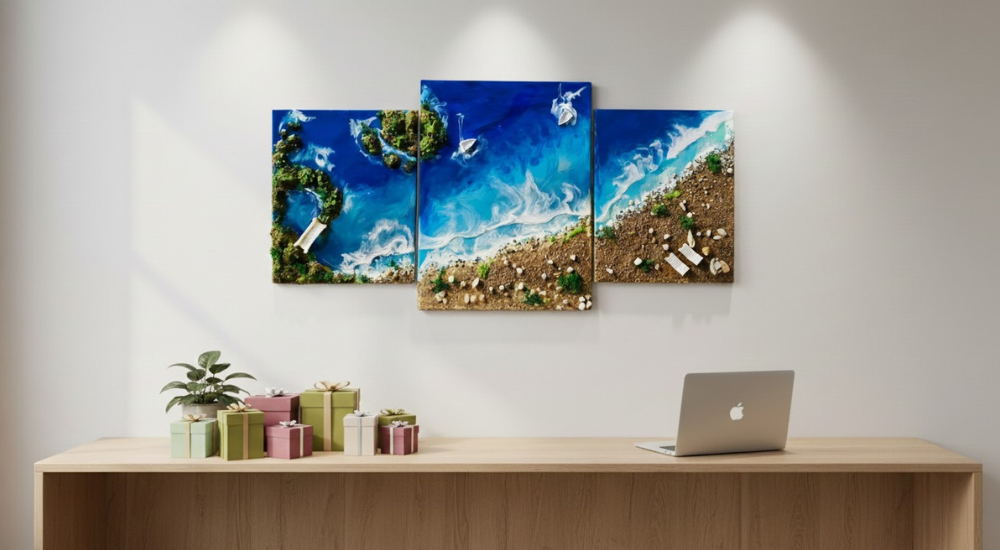
Handmade work provides something unique—pause—in a society where speed, mass production, and instant consumption are the norm. It encourages us to take our time, feel, and re-establish a connection with purpose. At Rangaat, art is made to tell tales rather than to occupy space.

Each piece is a quiet expression of thought, time, and intention.

What Is Handmade Art—and Why Does It Matter?

Human hands, emotion, and patience shape and refine handmade art. No two handmade pieces are ever the same, in contrast to decor manufactured by machines. The maker’s journey is reflected in every form, texture, and stroke.

Rangaat’s creations carry individuality—because authenticity cannot be replicated.

Understanding Conscious Craft

Conscious craft is about creating with awareness and responsibility. It means:

  • Respecting natural materials and processes
  • Honoring traditional techniques
  • Prioritizing quality over quantity
  • Creating with purpose, not pressure

At Rangaat, every artwork begins with a question:
Does this piece add meaning, or is it merely decorative?

Why Conscious Craft Matters Today

Contemporary dwellings are changing. People no longer want environments that merely look good—they want spaces that feel great.

Conscious handmade art:

  • Adds depth and personality to interiors
  • Supports local artists and artisans
  • Reduces environmental impact
  • Stands against fast, disposable decor culture

Rangaat’s art doesn’t demand attention. It creates presence.

Art That Tells a Story

Every piece of Rangaat art has its roots in culture, emotion, or memory. Because meaning is completed through connection, these pieces are not complete until they come into contact with the viewer.

This is art that doesn’t just exist on walls; it becomes part of lived experience.

Handmade Art and Living Heritage

Handmade art is a living example of heritage. It preserves customs while letting them change. By bringing traditional workmanship into modern settings, Rangaat creates a link between the past and present.

It proves that heritage isn’t outdated; it’s timeless.

Beyond Decor: Living With Art

Rangaat believes art should be lived with, not just displayed.

When conscious handmade art enters a space:

  • Rooms gain emotional balance
  • Silence becomes expressive
  • Every piece starts a conversation

This is decor with depth—art that stays long after the first glance.

Why Rangaat

Rangaat stands apart because:

  • Every piece is thoughtfully created
  • Art is slow, intentional, and meaningful
  • Silence is treated as a form
  • Decor becomes an experience

Here, art is not rushed. It is remembered.

Choosing Meaning Over Noise

Selecting thoughtful handmade art is a strong choice in a world full with visual noise. When you select Rangaat, you choose intention over imitation, depth over excess, and tales over fads.

Ranggat | Lotus Motifs in Art: Symbolism, Heritage, and Indian CultureCategoriesCreative

Ranggat | Lotus Motifs in Art: Symbolism, Heritage, and Indian Culture

The Timeless Charm of the Lotus Motif

The lotus, also called “kamal” in various Indian languages, is more than just a flower; it is a living emblem that is intricately linked to India’s artistic, cultural, and spiritual traditions. Lotus themes have been used for thousands of years to adorn South Asian art, from ancient temple carvings to folk paintings and textile designs. The human search for purity, wisdom, and artistic expression is aptly reflected in its journey from murky waters to immaculate blossom.

Symbolism Behind the Lotus in Indian Culture

1. Purity from the Depths

The lotus motif’s connection to purity is among its most potent symbolic meanings. The flower, which symbolizes inner purity, spiritual purification, and separation from worldly pollutants, emerges untarnished from muddy waters. Indian literature, philosophy, and art all make extensive use of this symbolism.

2. Path to Spiritual Enlightenment

The lotus represents transcendence, enlightenment, and spiritual awakening in both Buddhist and Hindu faiths. It is frequently depicted in Buddhist art in particular as the lotus throne or base that enlightened beings sit on, signifying the soul’s ascent from ignorance to enlightenment.

3. Divine Beauty & Prosperity

The lotus motif is frequently associated with a number of gods and goddesses in Indian mythology, particularly Goddess Lakshmi (wealth) and Lord Vishnu (protection and cosmic balance), who are frequently depicted holding or sitting on lotus flowers. The flower’s association with wealth, happiness, and heavenly grace is reflected in its potent symbolism.

Lotus Motifs Across Indian Art Forms

Temple Architecture

This theme is a key architectural element found in everything from the elaborate carvings of ancient Buddhist and Hindu temples to the symbolic lotus shapes that crown domes, such as the Lotus Temple in Delhi. As a visual invitation to hallowed areas, the lotus design adorns pillars, domes, and entry motifs.

Painting and Folk Art

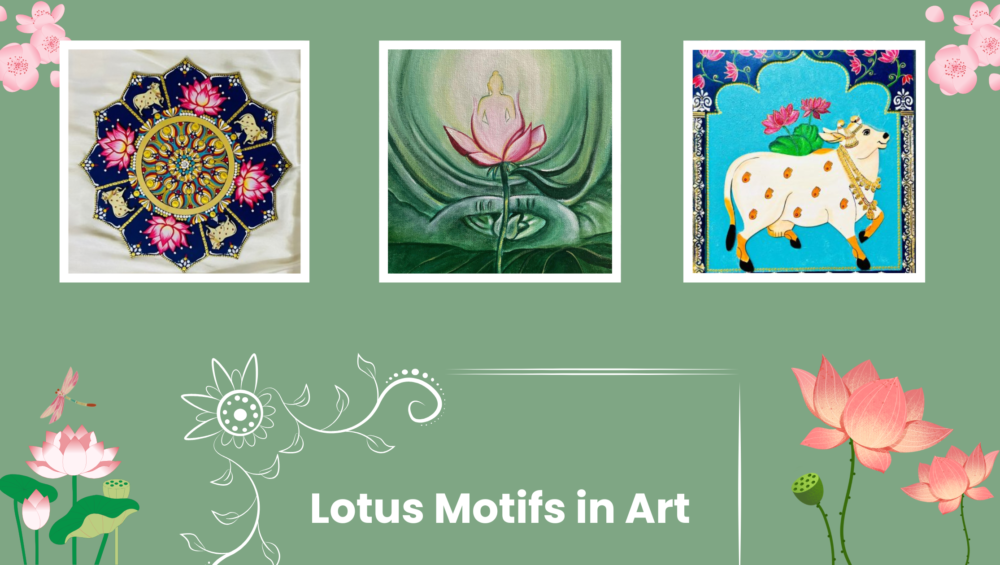
Lotus themes are commonly used in traditional Indian painting traditions, including as Mughal miniatures, Pichwai paintings, and tribal art, not only for their aesthetic appeal but also for their spiritual narratives woven into scenes of devotion and divine love.

Textiles and Crafts

The lotus design, which represents harmony, cosmic balance, and the life-giving energy of nature, is a prominent ornamental feature in Indian textiles such as ikat, Paithani silks, and embroidered nakshi kanthas.

Heritage and Cultural Impact

Across Religious Traditions

The lotus motif transcends cultural boundaries, although being most strongly linked with Buddhism and Hinduism. Its widespread cultural integration into Indian artistic sensibility is demonstrated by its appearance in Jain spiritual art as well as subsequent Islamic and Sikh building embellishment.

Philosophical Interpretation

The lotus also serves as a metaphor for life stages and human potential in Indian philosophy, showing how one may overcome obstacles, remain true to oneself in the face of hardship, and progress toward self-realization.

Modern Expressions of the Lotus Motif

Lotus motifs are no longer exclusive to classical art. They have an impact on modern fashion, sculpture, interior design, and even graphic design, constantly serving as a reminder to viewers of India’s rich cultural heritage and enduring artistic principles.

Why the Lotus Still Blooms in Indian Art

More than just a decorative element, the lotus design serves as a symbolic link between India’s cultural identity, spirituality, and artistic legacy. Its persistent presence in artwork, from contemporary paintings to ancient temples, relates to the eternal human longing for beauty, harmony, and purity.

The lotus is still one of the most powerful visual symbols in Indian culture, whether it is valued for its aesthetic beauty or spiritual profundity. This motif continues to inspire both artists and viewers.