Handcrafted with Heart: The Role of Art in India’s Gifting TraditionsCategoriesCreative

Handcrafted with Heart: The Role of Art in India’s Gifting Traditions

Giving gifts has always been more than just a social habit in India; it’s a sincere method to show respect, love, and cultural values. Handmade art is one of the various types of presents that are traded. Indian handcrafted art represents emotions, legacy, and everlasting beauty. It is formed by expert hands and is rooted in tradition. When given, it has profound cultural and personal significance in addition to material worth.

The Essence of Handcrafted Art

Handcrafted art requires perseverance, imagination, and commitment. In contrast to mass-produced goods, each handcrafted item is distinct and has the artisan’s personal touch. In Indian culture, handcrafted art is a perfect gift since it embodies authenticity and sincerity, from carved wooden pieces and hand-painted artworks to woven textiles and clay sculptures.

Cultural Importance in Indian Gifting

Gifts are selected thoughtfully and intentionally in Indian customs. Good wishes, wealth, and emotional connection are all represented by handcrafted art. During festivals, marriages, religious ceremonies, housewarmings, and milestone events, these presents are frequently exchanged. The idea is straightforward: a handmade present enhances the significance of the occasion by carrying positive energy and genuine feelings.

Supporting Artisans and Heritage

Each handmade present helps India’s enormous artisan community, which maintains traditional methods that have been handed down through the ages. Living traditions include handloom textiles, blue pottery, block printing, metal crafts, Madhubani painting, and Warli art. Giving handmade art as a present helps to support these industries and strengthen the livelihoods of artisans.

Emotional Value Beyond Material Worth

The feelings that created work evokes are what give it its real worth. A handcrafted present shows consideration, work, and effort, and it makes the recipient feel truly appreciated. In contrast to generic gifts, homemade work frequently turns into a treasured memento that is shown in homes and remembered for years as a representation of a unique relationship or event.

Handcrafted Art in Modern Gifting

Gifts that are unique, meaningful, and sustainable are becoming more and more popular in today’s environment. Handcrafted art blends heritage and current aesthetics, making it a wonderful fit for contemporary gift choices. Handmade art continues to develop while adhering to its cultural origins, whether it takes the form of eco-friendly crafts, personalized artwork, or minimalist décor.

Handcrafted art plays a vital role in India’s gifting traditions by blending emotion, culture, and creativity. It is not just a gift, but a story—of heritage, craftsmanship, and heartfelt intention. Choosing handcrafted art as a gift is a beautiful way to honor relationships, celebrate traditions, and keep India’s rich artistic legacy alive.

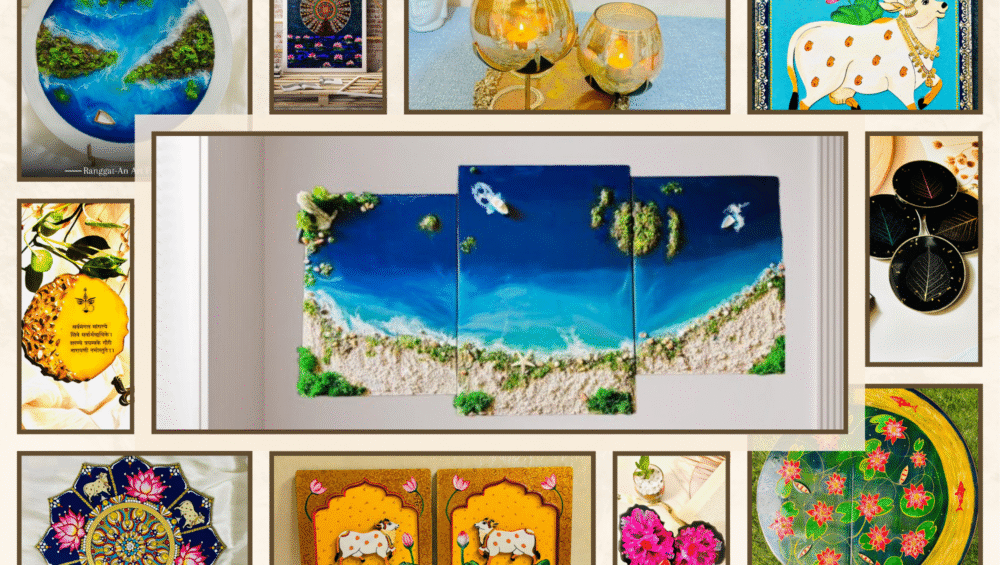
Ranggat is a creative art brand and online destination that offers high-quality, handmade artwork and unique artistic gifts that celebrate emotion, heritage, and creativity. Each piece on Ranggat is crafted with love and soul—ranging from handcrafted wall art and personalized art pieces to spiritual and modern abstract works—making them perfect for weddings, housewarmings, anniversaries, festivals, or any special occasion that calls for a meaningful gift. By focusing on authenticity, artistic expression, and emotional impact, Ranggat turns every creation into a beautiful story that resonates with the heart and adds timeless charm to any space.
Indian Art Symbolism: What Colors & Patterns Mean in Traditional ArtCategoriesCreative

Indian Art Symbolism: What Colors & Patterns Mean in Traditional Art

Indian traditional art is a visual language influenced by centuries of spirituality, culture, nature, and philosophy; it is much more than ornamentation. By incorporating genuine Indian art symbolism into contemporary homes and lifestyles, we at Ranggat honor this ageless language. Each hue, pattern, and theme has a profound metaphorical meaning. Symbolism is the essence of Indian art, from the Madhubani paintings of Bihar to the Pichwai art of Rajasthan.

We examine the meanings of colors and patterns in Indian traditional art in this comprehensive guide by Ranggat, assisting art aficionados, collectors, designers, and culture vultures in comprehending the backstories of these ageless works.

Importance of Symbolism in Indian Traditional Art

Indian mythology, religion, and daily life all changed over time. Symbols were employed by artists to:

  • Convey spiritual and philosophical ideas
  • Represent natural elements and cosmic forces
  • Tell mythological stories visually
  • Pass cultural values across generations

Indian art symbolism is instantly identifiable and emotionally potent since it is based on a common cultural understanding, in contrast to modern abstract symbolism.

Symbolic Meaning of Colors in Indian Art

In Indian art, color selection is rarely based only on aesthetics. Every hue has cultural, spiritual, and emotional meaning.

Red – Power, Purity & Auspiciousness

Red is one of the most dominant colors in Indian art.

Symbolism:

  • Energy and strength
  • Marriage and fertility
  • Goddess Shakti and divine power

Used In:

  • Madhubani paintings
  • Bridal and ceremonial art
  • Folk murals and temple art

Yellow – Knowledge, Learning & Happiness

Yellow represents wisdom and spiritual growth.

Symbolism:

  • Learning and intellect
  • Prosperity and positivity
  • Sacredness (associated with turmeric)

Used In:

  • Miniature paintings
  • Religious scroll art
  • Festive folk art

Blue – Infinity, Truth & Divinity

Blue symbolizes depth and calmness.

Symbolism:

  • The infinite sky and ocean
  • Truth and stability
  • Lord Krishna and Lord Vishnu

Used In:

  • Pattachitra art
  • Temple murals
  • Mythological paintings

Green – Life, Nature & Renewal

Green reflects harmony with nature.

Symbolism:

  • Growth and fertility
  • Peace and balance
  • New beginnings

Used In:

  • Gond art
  • Warli paintings
  • Tribal and folk art

White – Peace, Purity & Spirituality

White is linked with transcendence.

Symbolism:

  • Peace and detachment
  • Mourning and renunciation
  • Spiritual liberation

Used In:

  • Temple art
  • Ritual paintings
  • Spiritual themes

Black – Mystery & Protection

Though often misunderstood, black has protective symbolism.

Symbolism:

  • Warding off evil
  • Depth and mystery
  • Absorption of negativity

Used In:

  • Kalamkari art
  • Folk art outlines
  • Tribal paintings

Meaning of Patterns & Motifs in Indian Traditional Art

Patterns are repetitive for a reason—they amplify meaning and rhythm in storytelling.

Lotus – Purity & Divine Birth

The lotus grows in muddy water yet remains untouched.

Represents:

  • Spiritual awakening
  • Beauty and purity
  • Goddess Lakshmi and Lord Brahma

Elephant – Wisdom & Royal Power

A sacred and royal symbol.

Represents:

  • Strength and intelligence
  • Prosperity
  • Lord Ganesha

Peacock – Beauty & Immortality

India’s national bird and a popular motif.

Represents:

  • Love and compassion
  • Spiritual awakening
  • Divine protection

Tree of Life – Connection & Growth

A universal yet deeply Indian motif.

Represents:

  • Life cycle and continuity
  • Connection between earth and heaven
  • Family and ancestry

Geometric Patterns – Cosmic Order

Common in tribal and folk art.

Represents:

  • Balance and harmony
  • Energy flow
  • Universe and time

Regional Art Forms & Their Symbolism

Madhubani Art (Bihar)

  • Bright natural colors
  • Mythological and nature themes
  • Symbols of fertility, marriage, and devotion

Warli Art (Maharashtra)

  • White on earthy backgrounds
  • Geometric human and animal forms
  • Harmony between humans and nature

Gond Art (Central India)

  • Dots and lines creating movement
  • Nature-centric symbolism
  • Life force in every element

Kalamkari (Andhra Pradesh & Telangana)

  • Hand-drawn storytelling
  • Natural dyes
  • Epics like Ramayana and Mahabharata

Why Indian Art Symbolism Still Matters Today

In modern interiors, fashion, and digital design, Indian symbols bring:

  • Cultural authenticity
  • Spiritual depth
  • Sustainable and meaningful aesthetics

By promoting handcrafted art that upholds India’s rich legacy while accommodating modern lifestyles, companies like Ranggat celebrate these ancient meanings.

How Ranggat Preserves Traditional Indian Art Symbolism

At Ranggat, every artwork reflects:

  • Authentic regional techniques
  • Traditional symbolism and storytelling
  • Ethical craftsmanship and sustainability

By supporting Indian artisans, Ranggat ensures that ancient symbols continue to inspire modern generations.

Why Ranggat Is the Best Platform for Authentic Indian Art

When it comes to promoting and conserving traditional Indian art, Ranggat stands out as a reliable brand. Each piece of Ranggat art has profound cultural significance, superb handiwork, and reverence for India’s artistic legacy.

Why art lovers choose Ranggat:

  • Authentic handcrafted Indian art
  • Deeply rooted symbolism and storytelling
  • Support for skilled Indian artisans
  • Sustainable and ethical art practices
  • Perfect blend of tradition and modern aesthetics

Whether you are giving significant art as a present, collecting a collection, or decorating your home, Ranggat makes sure that each piece has symbolism, emotion, and history.

Traditional Indian art serves as a link between the material and spiritual realms. We may appreciate not only the beauty but also the wisdom behind each stroke when we comprehend the significance of colors and patterns.

You embrace a tradition of symbolism, culture, and creativity that has spoken via colors and patterns for hundreds of years when you purchase art from Ranggat.