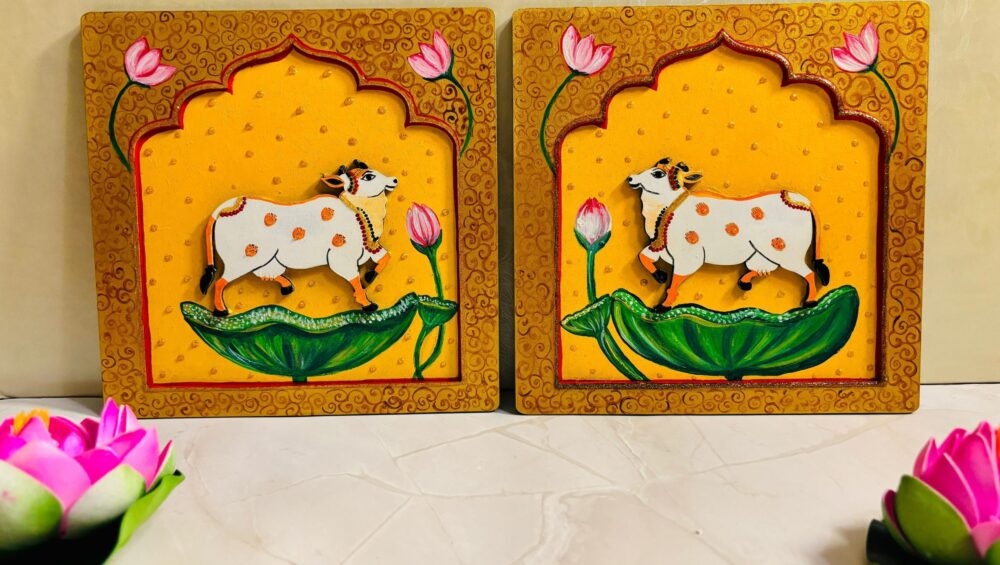
At Ranggat, every piece of art tells a story — not just through its colors and forms, but through the cultural heritage it carries. One such masterpiece is the Pichwai Style Cow with Jharokha, a traditional-inspired artwork that beautifully blends the essence of classical Pichwai art with creative modern expression.
Understanding Pichwai Art
Pichwai painting is a traditional Indian art form that originated in Nathdwara, Rajasthan. For centuries, these paintings were created as devotional backdrops for temples, especially behind the idol of Lord Shrinathji. Over time, Pichwai evolved into a celebrated art style known for its intricate detailing, symbolic motifs, and rich storytelling through visual elements.
The art form reflects themes of devotion, nature, seasons, and spirituality, making it both culturally significant and visually captivating.
The Sacred Symbolism of the Cow
In Indian culture, the cow symbolizes purity, prosperity, and nourishment. In Pichwai-inspired artworks, the cow often represents peace, divine blessings, and harmony with nature. Its calm presence evokes spiritual balance and positive energy, making it a meaningful motif for home décor and sacred spaces.
The cow’s association with Lord Krishna further deepens its significance, connecting the artwork to themes of devotion and timeless tradition.
The Jharokha: A Window into Heritage
The jharokha, an ornate architectural window commonly found in Indian palaces and heritage structures, adds a distinctive traditional frame to the artwork. In this piece, the jharokha acts as a symbolic window — offering a glimpse into India’s artistic legacy while enhancing the visual depth and elegance of the painting.
Where Tradition Meets Creativity
The Pichwai Style Cow with Jharokha by Ranggat is a thoughtful blend of heritage and innovation:
- Inspired by traditional Pichwai motifs and storytelling
- Designed to complement both classic and contemporary interiors
- Crafted with attention to fine details and balanced composition
This fusion allows the artwork to retain its traditional soul while appealing to modern aesthetics.
A Meaningful Addition to Your Space
This artwork is more than décor — it is an expression of culture, spirituality, and creative craftsmanship. Whether displayed in a living room, meditation area, or entryway, it brings a sense of calm, devotion, and artistic richness to its surroundings.
With the Pichwai Style Cow with Jharokha, Learn with Ranggat invites you to experience how traditional art can evolve beautifully while staying rooted in its origins.