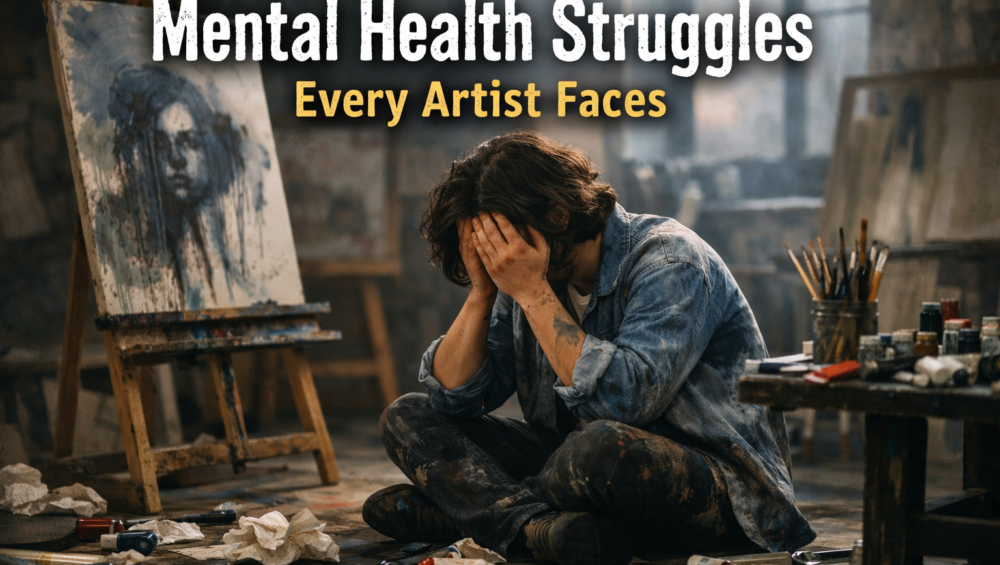
Art is beautiful. It inspires people, tells stories, and expresses emotions that words sometimes cannot. But behind every painting, song, or design, there is often a person quietly dealing with mental struggles. Being an artist is not just about creativity—it also comes with emotional challenges that many people don’t see.
In this article, we will explore the real mental health struggles artists face, in simple and clear words.
1. Self-Doubt and Lack of Confidence
One of the biggest struggles for artists is self-doubt.
Artists often question their own work:
- “Is my art good enough?”
- “What if people don’t like it?”
- “Am I even talented?”
Even skilled artists feel this way. They compare themselves to others and feel like they are not good enough. This constant doubt can stop them from creating or sharing their work.
2. Fear of Judgment
Art is personal. When artists share their work, they are also sharing their thoughts and feelings.
This creates a strong fear:
- Fear of criticism
- Fear of rejection
- Fear of being misunderstood
Negative comments can hurt deeply, especially for sensitive and creative people. Because of this, many artists avoid showing their work at all.
3. Creative Block
Sometimes artists feel stuck. This is called a creative block.
It feels like:
- No ideas come to mind
- Nothing feels exciting
- Everything they create feels bad
This can be very frustrating. Artists want to create, but their mind feels empty. This can lead to stress and sadness.
4. Loneliness and Isolation
Art is often a solo journey. Many artists spend long hours alone:
- Drawing
- Writing
- Practicing
While this helps them focus, it can also make them feel lonely. They may feel like no one understands them or their struggles.
Over time, this isolation can affect mental health and lead to feelings of emptiness.
5. Financial Stress
Not all artists earn stable income. Many struggle to make money from their work.
This creates pressure:
- Paying bills
- Managing daily life
- Worrying about the future
Financial stress can lead to anxiety and fear. Some artists even give up their passion because of money problems.
6. Comparison with Others
In today’s world, especially with social media, artists constantly see others’ work.
This leads to comparison:
- “They are better than me”
- “They are more successful”
- “Why am I not growing?”
This mindset is harmful. It reduces confidence and creates jealousy or frustration.
Reality: Every artist has a different journey and timeline.
7. Pressure to Be Perfect
Many artists try to make their work perfect.
They:
- Keep fixing small details
- Never feel satisfied
- Delay finishing their work
This is called perfectionism, and it can slow down progress. It also increases stress and makes art less enjoyable.
8. Emotional Sensitivity
Artists often feel emotions deeply. This helps them create meaningful art, but it also makes them more vulnerable.
They may feel:
- Sadness more strongly
- Rejection more deeply
- Stress more intensely
While sensitivity is a strength in art, it can also make mental struggles harder to handle.
9. Burnout
When artists push themselves too hard, they can face burnout.
Signs of burnout:
- Feeling tired all the time
- Losing interest in art
- Feeling mentally drained
Burnout happens when there is too much pressure and not enough rest.
10. Lack of Support
Many artists feel that their work is not taken seriously, especially by family or society.
They may hear:
- “Art is not a real career”
- “Do something practical”
This lack of support can hurt confidence and create emotional stress.
How Artists Can Take Care of Their Mental Health
Here are some simple ways artists can feel better:
Take breaks
Rest is important. It helps the mind refresh.
Stop comparing
Focus on your own journey.
Talk to someone
Share your feelings with friends or family.
Accept imperfections
Done is better than perfect.
Create for yourself
Not everything needs to be shared or liked by others.
Practice self-kindness
Be gentle with yourself.
Being an artist is a beautiful journey, but it is not easy. Behind the creativity, there are real mental struggles that many people don’t see.