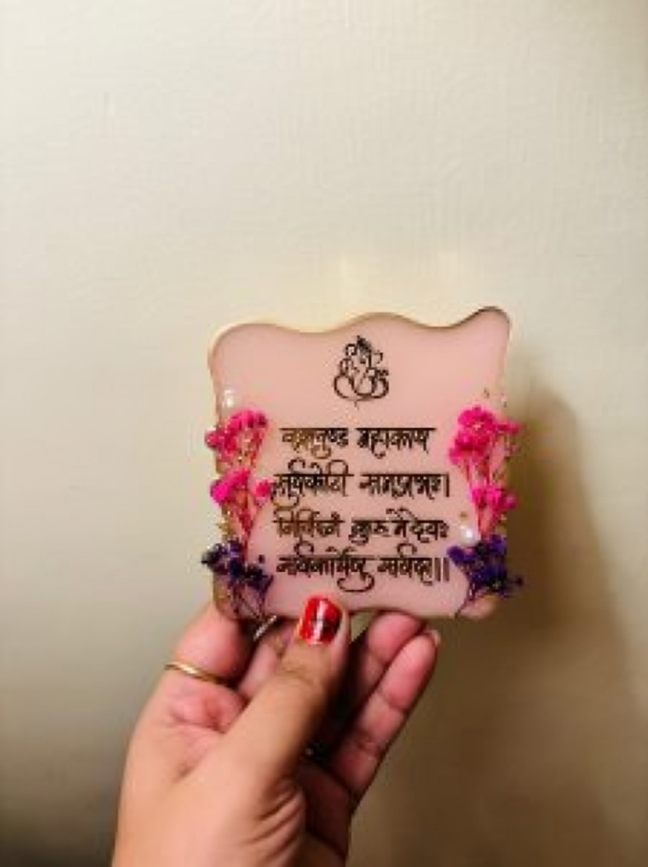
CategoriesCreative

Significance of the Ganesha Mantra

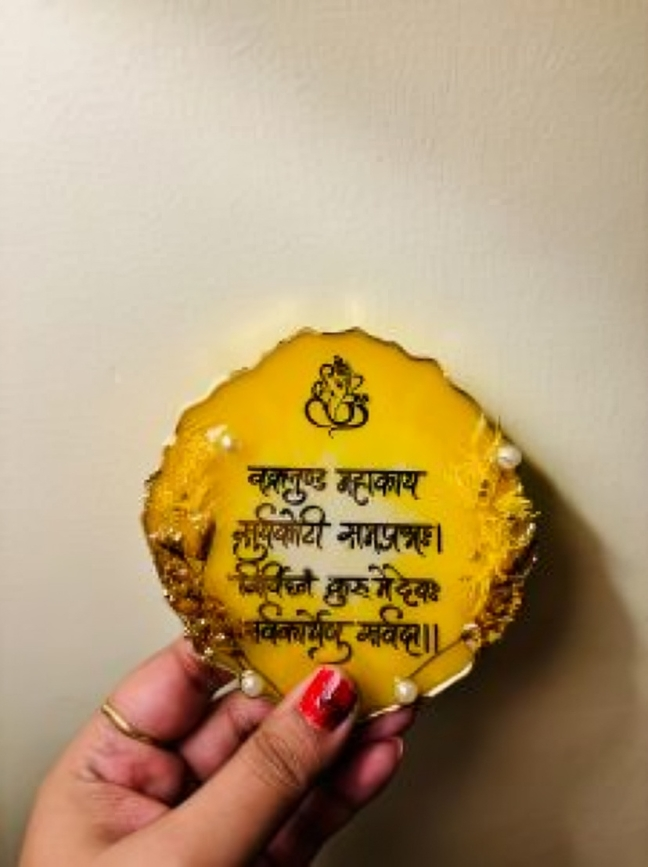
The Ganesha mantra, “Vakratunda Mahakaya Suryakoti Samaprabha, Nirvighnam Kuru Me Deva, Sarva Karyeshu Sarvada,” is a powerful Sanskrit chant dedicated to Lord Ganesha. To ensure success and smooth travel, Lord Ganesha, who is known as the remover of obstacles, is invoked before starting an important task.

Mantra Meaning:

1) Vakratunda: “The one with a curved trunk,” referring to Lord Ganesha’s distinctive feature.

2) Mahakaya: “The one with a massive form,” symbolizing immense strength and presence.

3) Suryakoti Samaprabha: “Shining with the brilliance of a million suns,” highlighting His divine energy and illumination.

4) Nirvighnam Kuru Me Deva: “O Lord, remove all obstacles.”

5) Sarva Karyeshu Sarvada: “In all my endeavors, always.”
    Importance:

    This mantra serves as a universal prayer for clarity, peace, and success. Chanting it on a daily basis can boost self-esteem, confidence, and the capacity to overcome obstacles. It is often repeated at the start of economic endeavors, spiritual activities, or auspicious occasions.

    Benefits of Chanting:

    1) Obstacle Removal: Ensures smooth progress in endeavors.

    2) Mental Clarity: Encourages focus and reduces anxiety.

    3) Divine Protection: Invokes blessings for protection and guidance.

    4) Positive Energy: Uplifts the mind and surroundings.

      One can bring Lord Ganesha’s blessings into their life and secure success and wealth through chanting this mantra with dedication and understanding its meaning.
      CategoriesCreative

      Vastu-Friendly Art: Choosing Paintings to Enhance Your Interiors

      Vastu Shastra, an ancient Indian architectural science, places a strong emphasis on a space’s energy balance in order to promote peace, prosperity, and good health. Adding Vastu-friendly artwork to your home is an easy yet powerful approach to promoting this flow of good energy.

      Choosing the Right Themes

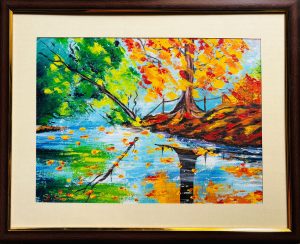
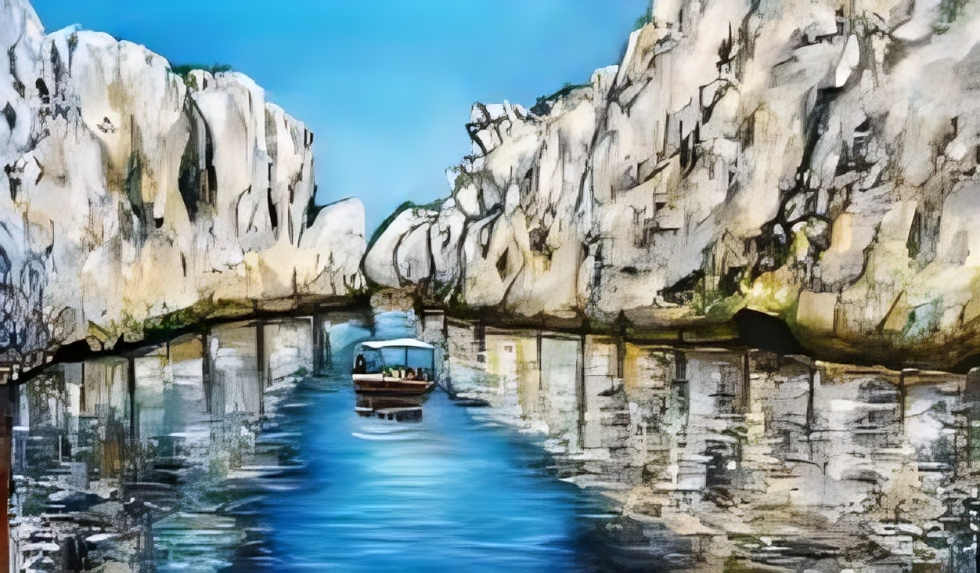
      1) Nature and Water Elements: Paintings of beautiful landscapes, flowing rivers, or serene water bodies are ideal for placing in the northeast direction. These themes bring calmness and clarity into your space.

      2) Sunrise and Light: You can place artwork that shows the rising sun or natural light in the east to represent growth, energy, and fresh starts.

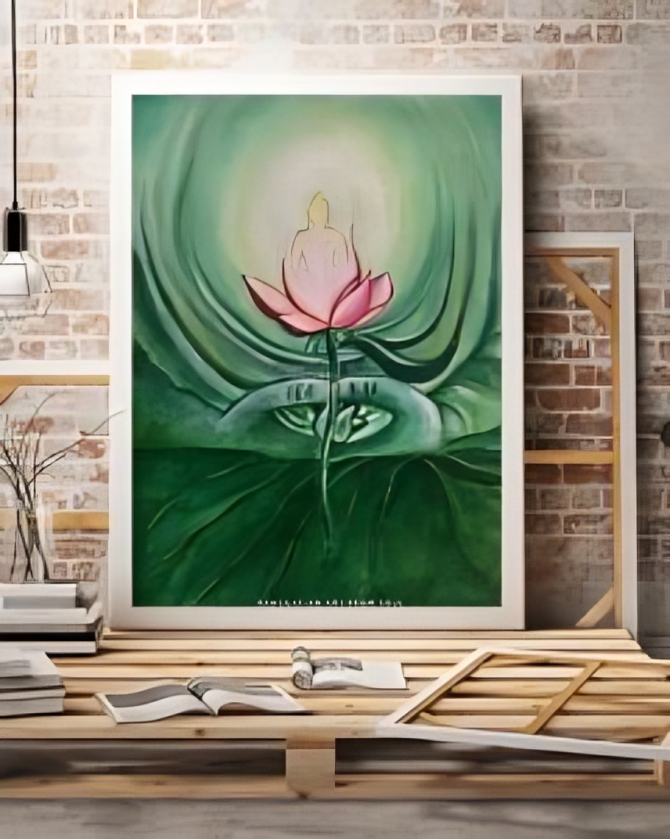
      3) Divine and Spiritual Figures: The prayer or meditation room is the ideal place for placing images of deities, meditative positions, or religious symbols since they promote devotion and serenity.

      Colors and Placement

      1) Vibrant Colors: Bright colors such as yellows and oranges can uplift energy levels and are well-suited for living rooms.

      2) Cool Tones: Blue and green bring peace and work beautifully in bedrooms or study areas.

      3) Avoid Dark or Negative Imagery: Paintings that show violence, sadness, or darkness should be avoided because they may create negative emotions.

      Tips for Placement

      • Ensure the paintings are hung at eye level and align symmetrically to create visual balance.
      • Use natural light or soft focus lighting to illuminate the artwork, enhancing its vibrancy and energy.

      Incorporating Vastu principles into your art selection not only enhances the visual appeal of your living areas but also brings a feeling of wellbeing and positivity.

      CategoriesUncategorized

      The Gayatri Mantra and the Power of OM: A Journey into Spiritual Essence

      The Gayatri Mantra: Essence and Meaning

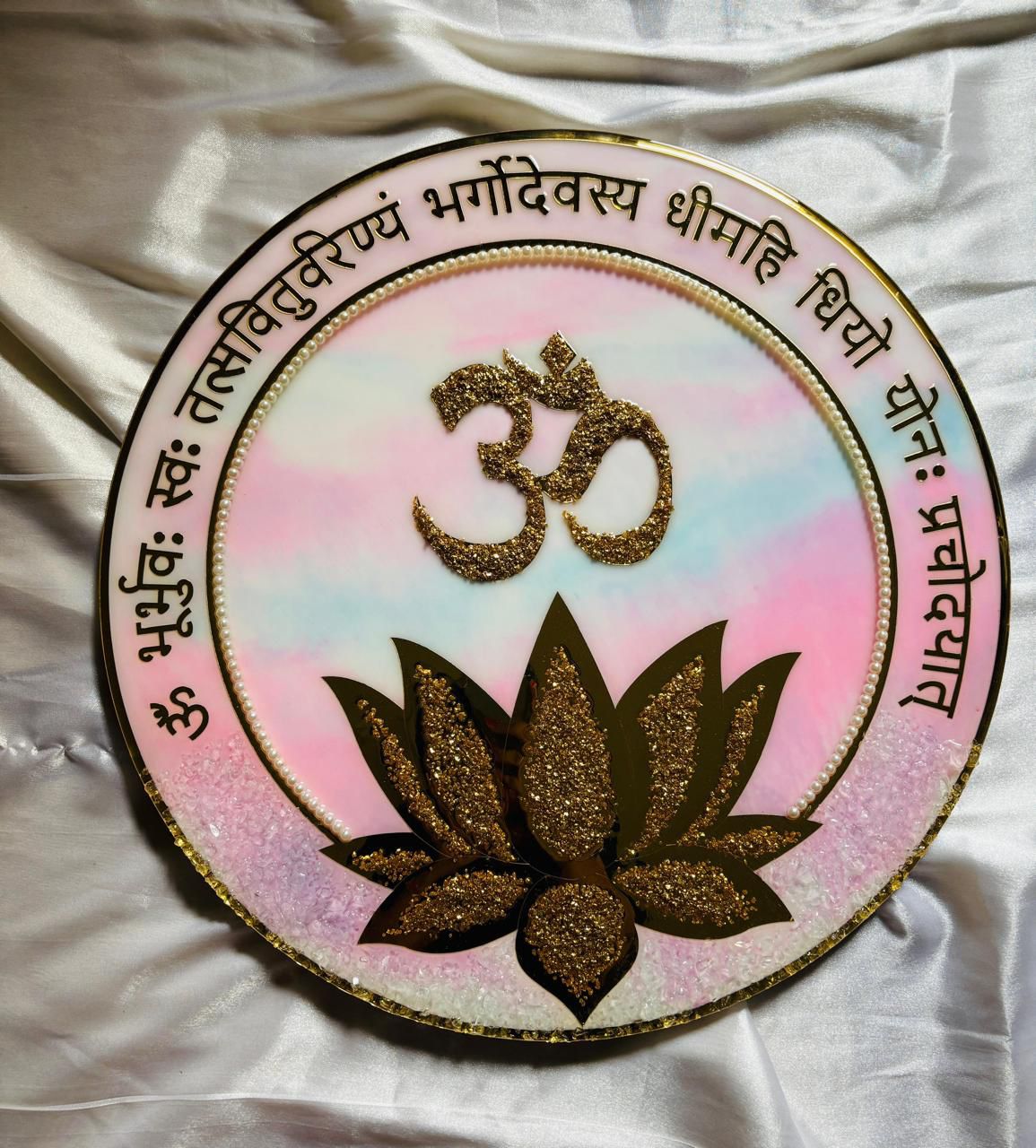
      The Gayatri Mantra, one of the oldest and most powerful Vedic mantras, originates from the Rigveda. It is a prayer dedicated to Savitr, the solar deity, symbolizing divine light and energy. The mantra is as follows:

      ॐ भूर् भुवः स्वः |
      तत्सवितुर्वरेण्यं |
      भर्गो देवस्य धीमहि |
      धियो यो नः प्रचोदयात् ||

      Translation:

      “We meditate on the divine light of the radiant source (Savitr). May that inspire and guide our intellect.”

      Key Interpretations of the Mantra:

      1) Om Bhur Bhuvah Svah: Acknowledges the three realms—earth (Bhur), atmosphere (Bhuvah), and heavens (Svah)—and calls upon the energy pervading them.

      2) Tat Savitur Varenyam: Invokes the supreme brilliance of the divine, symbolizing enlightenment and purity.

      3) Bhargo Devasya Dhimahi: Meditates on this divine radiance, seeking spiritual illumination.

      4) Dhiyo Yo Nah Prachodayat: A prayer for guidance and clarity in thought.

        The Power of OM

        The Power of OM is said to be the sacred sound that created the universe and establishes a person’s connection to the divine.

        Symbolism of OM:

        1) A: Represents creation or the waking state (Jagrat).

        2) U: Represents preservation or the dream state (Swapna).

        3) M: Represents dissolution or the deep sleep state (Sushupti).

        The three letters of the Om symbol, A-U-M, represent the three main gods of Hinduism: Brahma (the creator), Vishnu (the preserver), and Shiva (the destroyer). 

          The Synergy Between Gayatri Mantra and OM

          A strong spiritual energy emerges when the Gayatri Mantra and OM are chanting together. The Gayatri Mantra channels divine light, which improves clarity and knowledge, while OM acts as the foundation, supporting the mind and bringing it into connection with universal consciousness.

          The Spiritual Benefits

          1) Enhances Concentration: Chanting regularly helps to focus the mind, improving intellectual ability and mental clarity.

          2) Promotes Inner Peace: The Gayatri Mantra and the vibrations of OM calm the mind, reducing tension and anxiety.

          3) Connects with Universal Energy: The Gayatri Mantra helps connection with the divine, and OM resonates with the frequency of the universe.

          4) Purifies the Aura: Chanting these sacred sounds improves positivity and removes negative energy.

            How to Chant the Gayatri Mantra and OM

            1) Find a Quiet Space: Sit comfortably in a quiet place.

            2) Focus on Breath: Take a deep breath to calm your mind.

            3) Start with OM: Chant OM three times to ground yourself.

            4) Recite the Mantra: Chant the Gayatri Mantra slowly, focusing on its meaning

            5) End with Silence: Take a few minutes to sit quietly so you can feel the vibrations.

              CategoriesLifestyle

              Art Therapy: How Art Can Help with Stress, Anxiety, and Depression

              Art therapy is a powerful and creative approach to mental health and well-being. It provides a secure, embracing environment for people to process their feelings, lower stress levels, and deal with mental health issues like anxiety and depression by fusing artistic expression with therapeutic methods.

              “Art speaks where words are unable to explain.”
              – Pam Holland

              How Art Therapy Works

              Art therapy doesn’t require any artistic skill or experience. It focuses on the process rather than the final product. Creating art, whether it be through painting, drawing, sculpting, or collage, can help people express feelings they find difficult to explain, access their subconscious, and become more self-aware.

              The state of “flow,” in which the mind is completely absorbed in the present moment, can be created by artistic creation. The negative thought patterns linked to sadness and anxiety may be changed by doing this. Moreover, expressing complex emotions into artistic form might help them become more understandable and easier to address in therapy.

              Benefits of Art Therapy

              1) Stress Relief: Creating art is soothing and peaceful. Focusing on colors, patterns, or movements can distract the mind from worries and promote relaxation.

              2) Emotional Release: Art is a nonverbal way for people who find it difficult to express their emotions to express joy, fear, grief, or anger.

              3) Boosts Self-Esteem: Finishing a piece of art can give you a sense of achievement, which increases resilience and confidence.

              4) Encourages Mindfulness: Engaging with tactile and visual elements helps people become more grounded in the present moment, which helps reduce symptoms of depression and anxiety.

              Art therapy can be particularly beneficial for individuals who find it difficult to open up in traditional talk therapy or those looking for a complementary treatment. It is commonly used for people dealing with trauma, grief, chronic illness, or mental health disorders.

                Art therapy is guided by trained professionals who ensure a safe and supportive environment. It offers a path to healing where words may fail, proving that sometimes art speaks louder than words.

                CategoriesCreative

                Exploring Artistic Inspiration from Nature: Incorporating Ocean, Earth, and Sky Elements

                “The artist and the photographer seek the mysteries and the adventure of experience in nature.” ~ Ansel Adams

                Exploring Artistic Inspiration from Nature: Incorporating Ocean, Earth, and Sky Elements

                Artists have long found great inspiration in nature since it provides an infinite variety of colors, textures, and forms. The sky, earth, and ocean—each a work of art full of beauty and symbolism—are some of its most attractive qualities.

                “Art takes nature as its model.” ~ Aristotle

                The Ocean:

                The ocean is a symbol of depth, movement, and mystery. Its constantly changing colors, which range from peaceful turquoise to stormy gray, can provide inspiration for textiles, paintings, and sculptures. In order to capture its rhythm and infinite energy, artists frequently replicate its fluidity using blown glass, abstract brushstrokes, or flowing designs.

                The Earth:

                Earth is a symbol of warmth, texture, and solidity. A visual and physical feast is offered by the variety of plant life, the softness of the soil, and the texture of the rocks. These earthy components are frequently used in ceramic sculptures, earthy color palettes, and prints with a natural theme, which create a feeling of connection.

                The Sky:

                The sky is a limitless source of color, light, and feeling. It represents freedom and limitless possibilities, from the calm blues of midday to the flaming gradients of dawn. Its spiritual displays can be explored by artists through large-scale paintings that replicate its power, light structures, or watercolor washes.

                Artists may go beyond boundaries and incorporate a bit of nature into their creations by including these elements. Whether in realistic or abstract representations, the connection of the sky, earth, and ocean serves as a reminder of our deep connection to nature.

                CategoriesCompany Insight

                Behind the Scenes at Ranggat: How We Craft Custom Art Pieces for Clients

                Behind the Scenes at Ranggat: How We Craft Custom Art Pieces for Clients

                Custom art creation is a complex process that combines artistic expression with client-specific requirements. Every piece at Ranggat is brought to life through a meticulous, step-by-step creative process.

                Understanding Clients’ Requirements

                We begin our journey with deeply understanding the visions of our clients. We discuss their tastes, style preferences, and intended display setting, which helps us shape a piece that will perfectly align with their expectations and space. This phase is critical as it forms the foundation for the entire creation process.

                Creating a Rough Sketch

                We translate the client’s vision into a rough drawing after we understand the client’s vision. We use this sketch to show the client a basic concept and help them visualize the work. It gives us a preview of the finished piece of art and assists us in making sure everything is in harmony before proceeding.

                Choosing the Right Material

                Selecting the right materials is crucial to getting the durability and appearance you want. We carefully select materials based on the client’s required longevity, functionality, and appearance, whether it be canvas, metal, wood, or another medium. This step guarantees that the item will not only look fantastic but also endure over time.

                Crafting the Art Piece

                Our artists start working on the artwork after receiving a sketch and the materials that are required. Here is where the true magic occurs: turning raw materials into a work of art through skillful techniques honed over years. Our artisans pay close attention to detail, bringing each aspect of the design to life with precision.

                Adding the Finishing Touch

                The final stage is all about refinement. We carefully add the final touches, which include painting, polishing, and adding textures to make the piece stand out. The artwork has its unique character and completed look, ready for enjoyment, thanks to these minor yet significant changes.

                Delivering a Final Artwork

                We prepare the item for shipping following a thorough quality check. In order to provide our clients the opportunity to view a masterpiece created just for them, we take great effort to guarantee that the artwork arrives in perfect condition. Our goal is to create a piece that speaks to the client on all levels from concept to execution.

                Every Ranggat creation is a unique experience for our team and clients because of the journey from the initial idea to the finished artwork.

                CategoriesCreative

                The Evolution of Mandala Art: From Ancient Spiritual Symbol to Modern Design

                Introduction to Mandalas: Sacred Circles of Harmony

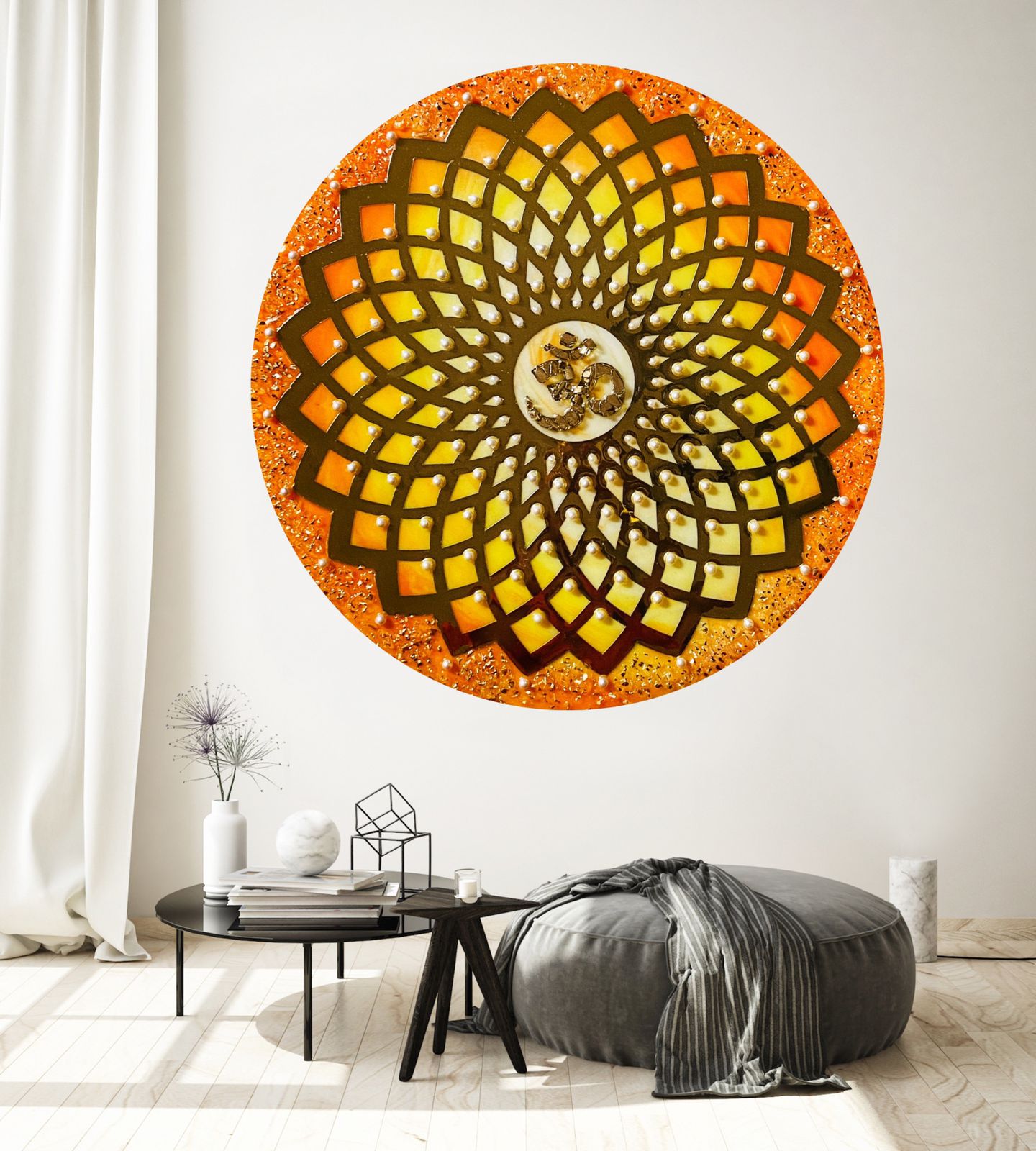
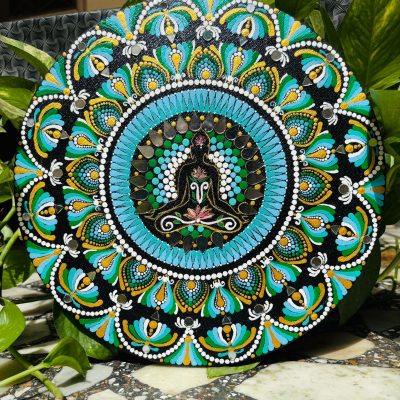
                “Mandala,” which means “circle” in ancient Sanskrit, is a symbol of unity and wholeness. For ages, mandalas have been used in many cultures, such as Native American, Buddhist, and Hindu customs. Originally used in meditation and ceremonies to lead individuals on enlightenment journeys, mandalas were spiritual symbols of the universe. They frequently had symmetrical patterns and layers of concentric circles, creating complex designs that were both visually appealing and meaningful.

                Ancient Roots: Mandalas in Religion and Spirituality

                In the beginning, mandalas were made as holy artworks that were frequently painted or drawn on temple walls or scrolls. Monks and practitioners of Buddhism and Hinduism used mandalas as centers for prayer and meditation. With the focal point representing the center of the universe or the core of the soul, each layer and design symbolized various aspects of the universe, gods, or human awareness.

                Mandalas in Eastern and Western Traditions Mandalas become widely used in a variety of religious and cultural contexts over time. Sand mandalas, which represent the impermanence of life, became an important component of Tibetan Buddhism. Medicine wheels and other circular patterns were used as symbols of balance and harmony in Native American cultures. These symbols began to appear in Western art and psychology as the globe became more interconnected.

                Mandalas in Modern Art and Design

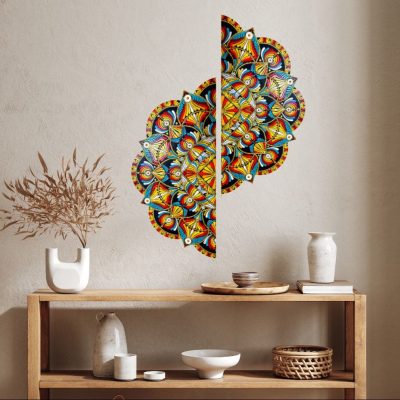
                Mandalas are now widely used as decorative and expressive art, transcending their religious and cultural origins. Mandalas are used by artists to combine traditional symbols with modern aesthetics in paintings, tattoos, and graphic designs. Mandala patterns are popular in many design areas, from fashion to interior decor, because of their symmetry and repetition, which promote relaxation and aesthetic appeal. Modern mandalas can be highly elaborate or minimalist, according to each person’s preferences, and frequently have spiritual or personal meaning.

                Mandalas in Interior Design and Wellness Spaces Today, mandalas have become popular in interior design, where their beauty and calming effects are appreciated. Particularly in meditation rooms or wellness studios, mandala paintings, murals, and furniture pieces give living areas depth and tranquility. They are the perfect choice for spaces designed to promote calm and reflection because of their intricate designs, which promote mindfulness and add an environment of peace.

                CategoriesCreative

                Sustainable Art: Eco-friendly Materials and Techniques for the Conscious Artist

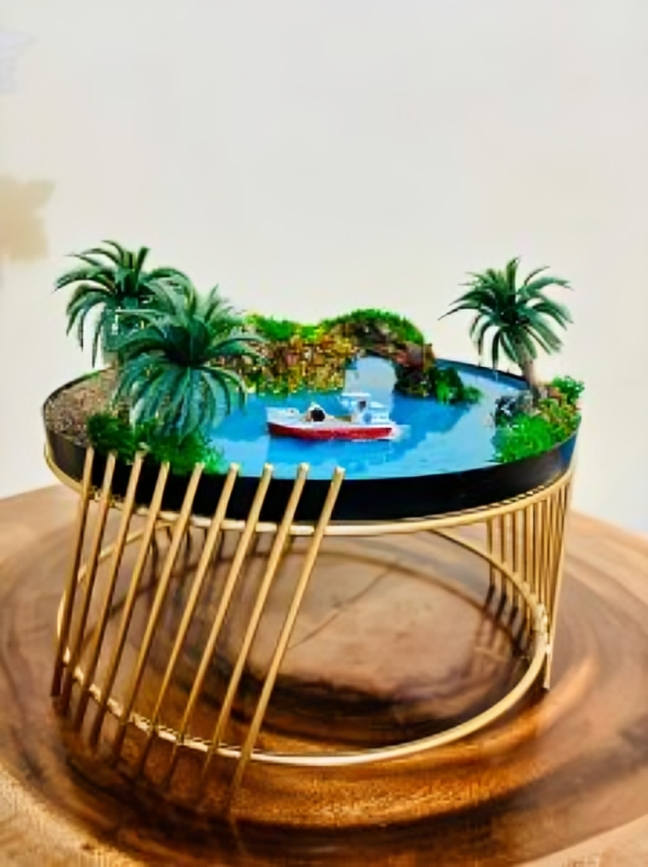
                In a time where environmental consciousness is essential, a growing number of artists are using sustainable methods and materials in their production. Sustainable art combines beauty and environmental consciousness to honor both the world and artistic expression. Selecting environmentally responsible materials, such as wood and natural flowers, can result in works that are insightful, inspiring, and have a strong connection to nature for the conscious artist.

                Working with Wood: Carving Out a Green Future

                One of the most classic and environmentally friendly art materials is wood. For sculptures, carvings, and installations, artists can use driftwood, recycled wood, or even responsibly harvested, locally harvested wood. Wood’s unique grains and textures give each piece identity and mirror the natural environment, which is what makes it so beautiful. Beeswax and natural oils are examples of sustainable wood treatments that can be used to finish the artwork without using dangerous chemicals. In order to emphasize that even what is thrown away may become art, artists may even use wood scraps or fallen branches, which reduces waste and gives materials new life.

                Art with Natural Flowers: Capturing Fleeting Beauty

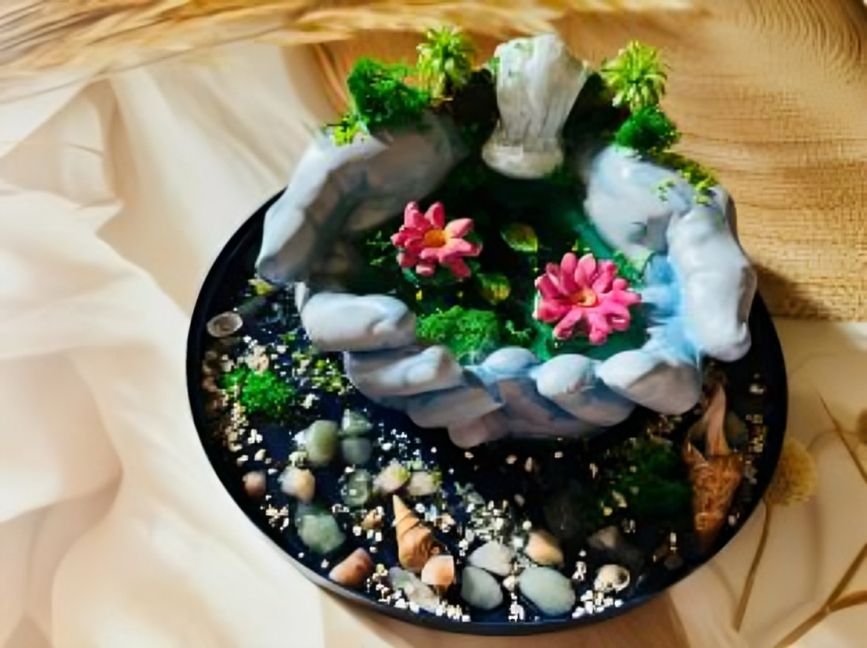
                Artists are able to express the transient splendor of nature through the use of actual flowers in their works. For long-lasting artwork, such as jewelry or wall art, flowers can be dried, pressed, or embedded in environmentally friendly resin. In order to extract pigments from plants and flowers for use in paintings or textile arts, artists might also experiment with floral dyes. This method eliminates the environmental impact of synthetic paints while allowing a palette that is directly inspired by nature.

                Eco-Friendly Techniques: Making the Process Sustainable

                Sustainable art goes beyond materials—it includes techniques and processes. Many conscious artists choose low-energy tools, avoiding machinery that requires significant energy. Others may utilize handcrafting, which reduces environmental impact and brings a personal touch to each piece. Upcycling—reusing materials in new ways—is another method to repurpose waste and create innovative, eco-friendly artworks.

                Artists have an effective way of expressing their creativity while honoring the earth through sustainable art. Eco-friendly materials, whether used with wood or real flowers, give art a lovely, fresh, and natural look that strengthens the bond between the artwork and the natural world. Artists that use these sustainable techniques create art for a more thoughtful, greener future in addition to the present.

                CategoriesTips & Tricks

                The Journey of Texture Art: From Concept to Canvas

                A dynamic and tactile kind of artistic expression, texture art gives a work depth, movement, and emotion. The physical element that texture art offers, in contrast to traditional painting, which emphasizes color and composition, allows viewers to feel the artwork in addition to seeing it. From idea to completed canvas, the process is both creative and technical, connecting an artist’s vision with a special material.

                Conceptualizing the Idea

                Artists spend a lot of time in the conceptual stage before texture touches canvas, figuring out what they want to say and the feelings they want to attract. They think about which textures will convey their message the best, frequently taking ideas from abstract ideas, architecture, or nature. The spatial composition is also planned with artists, who consider the ways in which light and shadow will affect the textures.

                Selecting Materials and Tools

                A wide range of materials are available to texture artists, ranging from typical acrylic paints to unusual materials like fabric, sand, or plaster. Tools can include palette knives, scrapers, sponges, and other tools for achieving particular effects. The texture’s feel, appearance, and light interaction are all determined using the materials and tools used.

                Techniques in Creating Texture

                Each texture is carefully created through the use of scraping, carving, and layering techniques. It is common for artists to apply several layers, allowing each one to dry before adding the next. Some use their fingers to apply paint directly, while others experiment with thick brushstrokes. Common methods for adding depth and complexity include sgraffito, which involves scratching into layers, and impasto, which involves applying paint thickly.

                Bringing the Vision to Life on Canvas

                The canvas represents the last frontier where all ideas and methods come together. To achieve the desired texture, artists start layering their materials, sculpting, and reshaping. As artists modify their work to fit the changing appearance and feel, this process frequently entails improvisation. With each stage, new shapes and textures are revealed, making the process just as much of a journey as the idea itself.

                Texture Art’s Impact on the Viewer

                Texture art is special because it appeals to senses other than sight. It encourages a more engaging experience through touchable surfaces. Each piece is made more interactive and engaging with the addition of emotion through the raised surfaces, grooves, and different texture depths. With creating a three-dimensional impression that improves atmosphere and stimulates curiosity, texture painting may completely change a room.

                From Concept to Canvas

                Texture art is a unique fusion of creativity, talent, and trial and error. Every sculpture tells a different tale, starting with an idea and developing via deft use of materials and methods. Texture art is an enthralling form of contemporary expression since it not only adds emotional depth but also physically represents the artist’s journey.

                The transformational power of texture is demonstrated in this art form, which shows that art may be more than just what is visually appealing.

                CategoriesUncategorized

                The Fusion of Traditional and Contemporary Art in Indian Culture

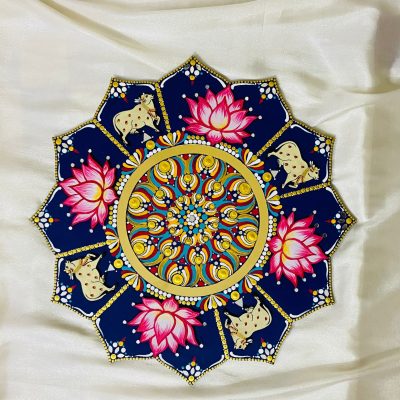
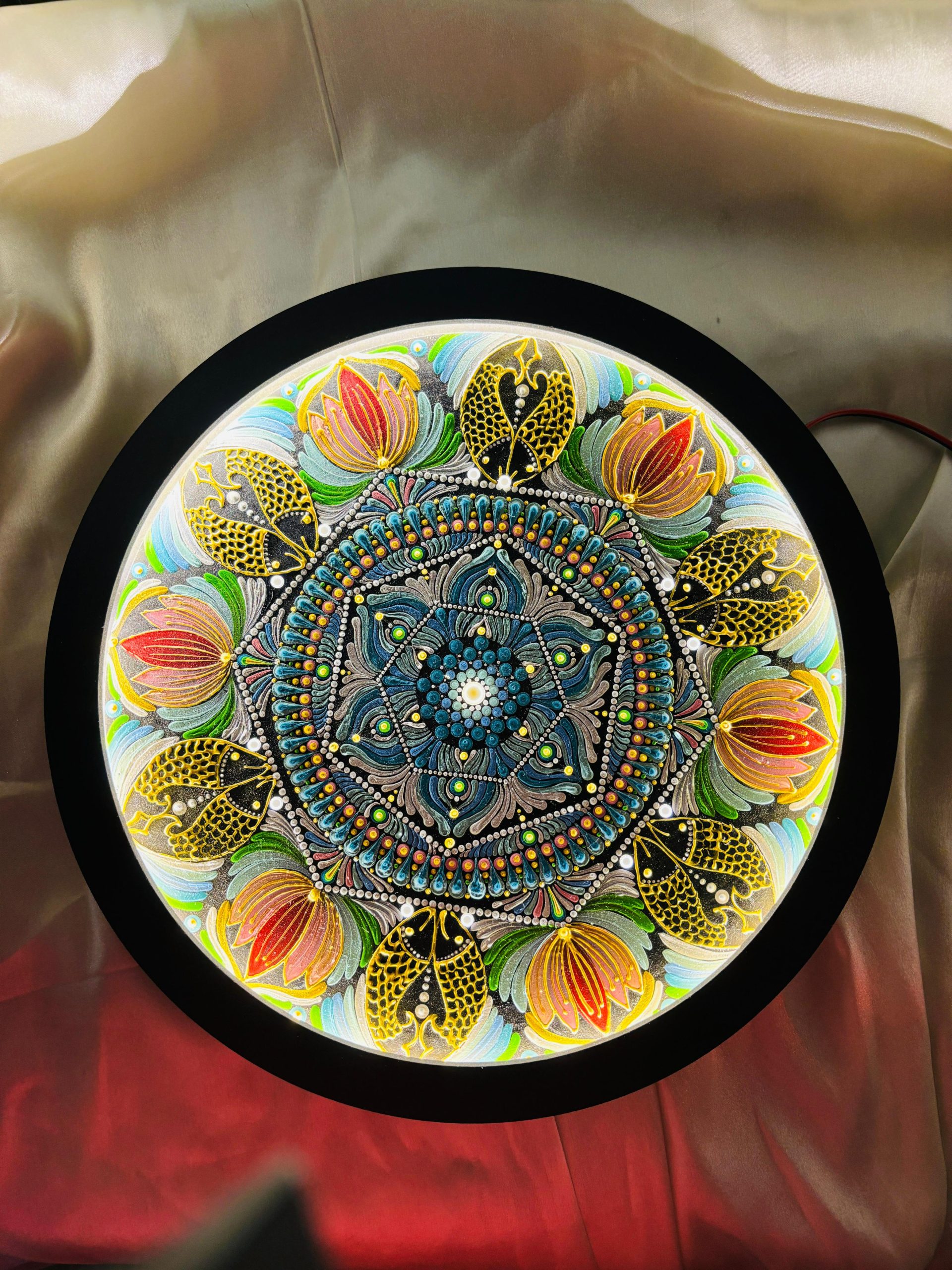
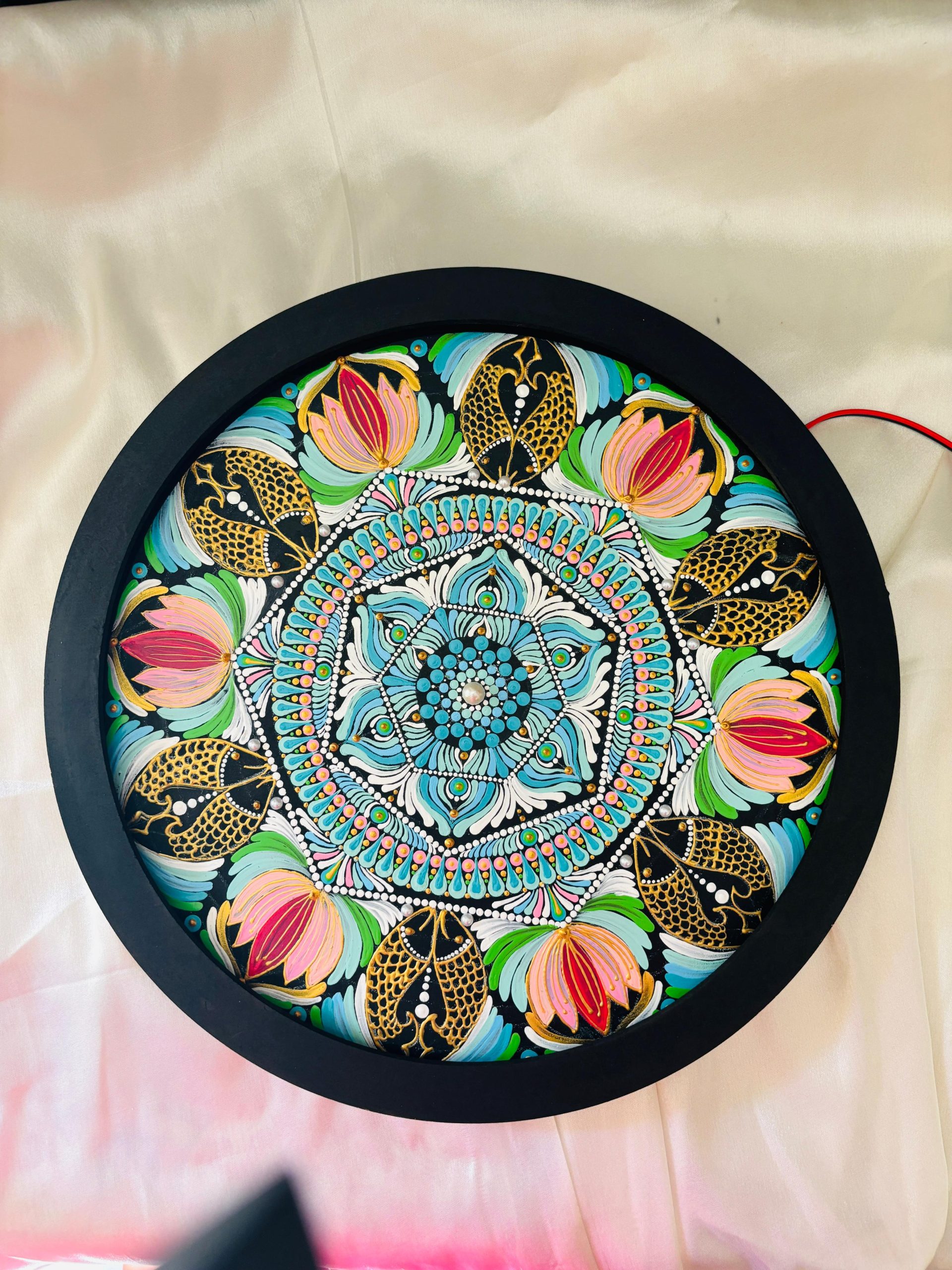
                Fish and lotus are very symbolic in Indian culture and are often found in artistic and spiritual manifestations, particularly mandalas. In Buddhism and Hinduism, the lotus is a sacred flower that symbolizes enlightenment, purity, and rebirth. Its bloom in muddy waters represents overcoming life’s obstacles to reach a better state of life. Frequently portrayed in couples, fish are seen as representations of wealth, fertility, and transformation, symbolizing the organic flow and diversity of life.

                The combination of fish and lotus flowers into mandalas enhances their spiritual meaning and brings growth, balance, and good energy into one’s life.

                India’s artistic heritage is a dynamic fusion of modern and traditional styles. India, a nation rich in ancient art traditions, has skillfully combined contemporary trends with its age-old methods. By bringing the past and present together, this fusion enhances cultural expression.

                1. Traditional Indian Art Forms: A Historical Legacy

                India has a rich artistic heritage, with many different art styles that have cultural and religious significance, including Tanjore painting, Madhubani, Pattachitra, and Warli. Indian art has long used vibrant colors and elaborate patterns to portray tales, rituals, and everyday life. These traditional forms of art are admired for their workmanship and symbolism, which have been transmitted down through the years.

                2. The Influence of Globalization and Modernity

                India is becoming more receptive to modern and Western influences as a result of globalization. Today’s artists are exposed to a wide range of media, methods, and ideologies, resulting in a changing art landscape that blends regional customs with international trends. While honoring their culture, contemporary Indian painters use abstract, minimalist, and conceptual elements.

                3. How Artists Are Blending the Old with the New

                Contemporary Indian artists modify classic subjects using a variety of mediums, such as mixed media and digital art. Some artists, for example, display religious symbols in a modern, abstract style or integrate Madhubani designs into contemporary designs. The combination of methods gives traditional art an entirely new perspective on life and makes it applicable to a modern audience.

                4. The Role of Art Galleries and Exhibitions

                Exhibitions and art galleries that display artworks that combine traditional and modern features are important in promoting this fusion. Younger generations are drawn in with exhibitions celebrating India’s fusion art, which encourages them to value and conserve old artistic traditions while welcoming innovation.

                5. Impact on India’s Global Cultural Presence

                Indian culture may reach a wider global audience by fusing traditional and modern art. Indian art is now more approachable and relatable because of the fusion, which increases its attraction for art enthusiasts everywhere. This helps to bridge cultural gaps and gives India’s artistic identity a special place on the international scene.

                A Continuous Evolution of Indian Art

                India’s capacity to combine traditional and modern art provides proof of its adaptability and creativity. As Indian artists continue to experiment with this combination, they push limits and honor their past, resulting in a vibrant, timeless, and contemporary art environment.